
Why storm prep matters for homes across the Denver Metro
Along the Front Range, a clear sky can turn into a hail-producing thunderstorm in less time than it takes to run an errand. Homes from Englewood through Aurora and out toward Colorado Springs sit in a corridor where spring and summer storms regularly bring hail, straight-line wind, and heavy rain with little advance notice. A few minutes of prep before the sky turns green can mean the difference between a roof that rides out the storm and one that needs emergency attention that night.
Most of what matters here isn't complicated. It's gutters that are already clear, a quick set of photos on your phone, and knowing where your attic access and water shutoff are before you need them in a hurry. None of it takes long, but it has to happen before the warning, not during it.
What actually happens to a roof during a hail or wind event
Hail bruises and cracks shingle mats, loosens granules, and can dent metal flashing and vents. Wind works a different angle, it gets under shingle tabs and flashing edges and pries them loose, especially on a roof with any existing wear. The two often arrive together in a Front Range storm, which is why a roof that looked fine the week before can come out of one storm needing real attention.
Before the storm: what's at risk
Gutters packed with leaves and debris can't move water fast enough once the rain starts, so it backs up under the shingle edge or the fascia instead of draining away. Loose patio furniture, trampolines, and grills become wind-driven projectiles that can crack siding or shatter windows on impact.
Anything overhanging the roofline, especially dead or weak branches, is a liability in high wind. A branch doesn't need to be huge to punch through shingles or dent a gutter run when it drops from twenty feet up.
During the storm: what you can't control
Once the storm arrives, there's very little left to do but stay inside and away from windows. Hail size and wind speed are out of your hands at that point, which is exactly why the prep work has to happen beforehand.
The goal of pre-storm prep isn't to stop the storm from doing anything, it's to make sure nothing you control adds to the damage, and that you have a clear record of your home's condition going in.
| Task | Before the storm | Morning after |
|---|---|---|
| Photos | Wide shots of roof, gutters, and siding from the ground | Compare against before photos for new damage |
| Gutters | Clear of leaves and debris, downspouts flowing freely | Check for dents, sagging, or granules in the runoff |
| Yard items | Furniture, grills, and planters moved or tied down | Check for debris that may have hit the house |
| Trees | Trim branches that hang over the roofline | Look for broken limbs resting on the roof |
The parts of your home that take the first hit
The roof surface itself absorbs most of the impact in a hailstorm, but flashing around vents, chimneys, and skylights is often where water finds a way in after the storm, even when the shingles look okay from the ground. Gutters and downspouts carry the water away from the roof edge and the foundation, so anything clogged or damaged there shows up fast as overflow or pooling.
Attic access matters too, since it's the fastest way to check for a new leak without climbing on a wet roof. Knowing where your main water shutoff is located is a separate but related habit, useful if a storm causes a plumbing issue rather than a roof one.
Step-by-step: your 5-minute storm prep routine
This is the short version, the one you can actually do when a storm watch is issued and you've got twenty minutes before the sky turns. Keep it simple enough that you'll actually follow it every time.
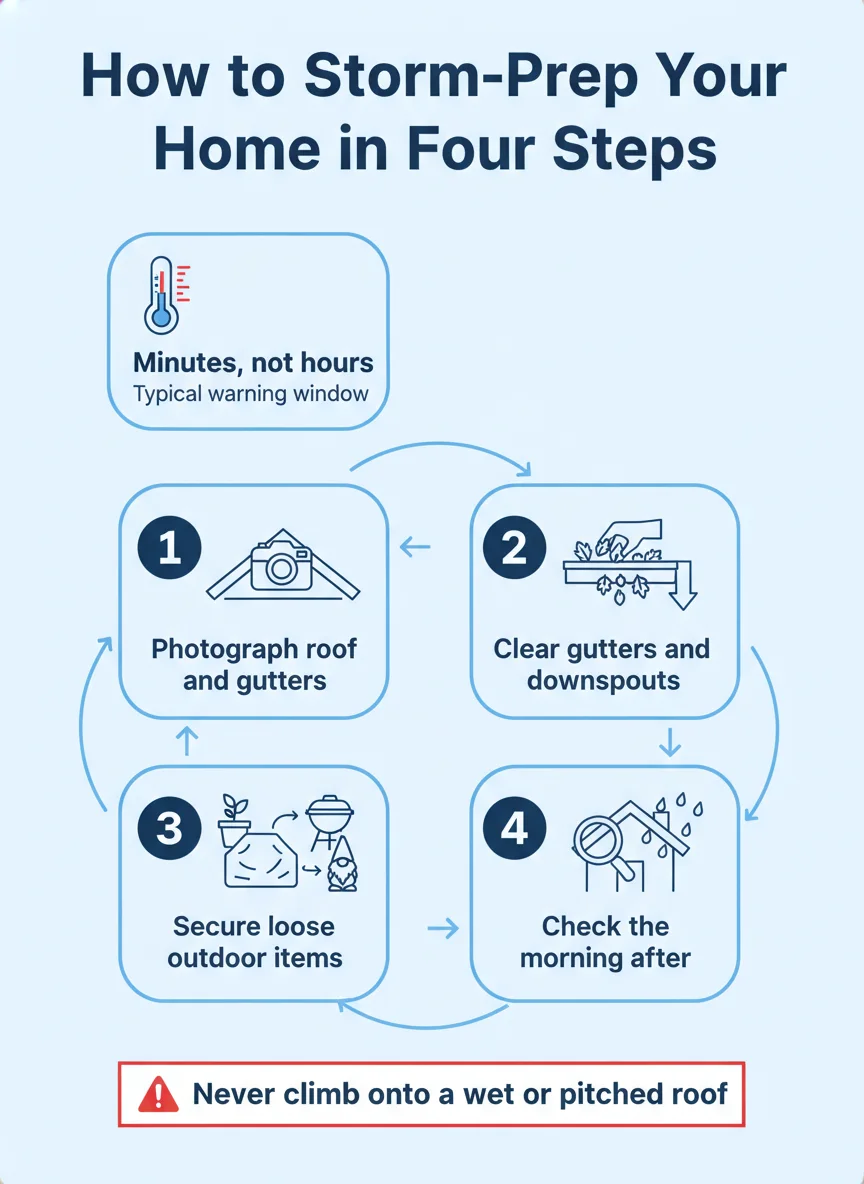
- Take photos first: Walk around the outside and snap wide photos of the roof, gutters, and siding from the ground. This is your before record if anything changes.
- Clear the gutters: Pull any leaves or debris you can reach safely so water has somewhere to go once the rain starts.
- Secure loose items: Bring in or tie down furniture, grills, planters, and anything else wind could pick up and throw at the house.
- Trim overhangs you can reach: Cut back any low branches hanging near the roofline, and note anything higher up that needs a professional later.
- Locate attic access and shutoff: Confirm you know where the attic hatch and the main water shutoff are, so you're not searching for them during an actual leak.
- Close blinds and shutters: Reduce the risk of shattered glass inside the home if wind-driven debris hits a window.
What to look for the morning after a storm passes
Once the weather has cleared, walk the same loop you did before the storm and compare what you see to your photos. Granules collecting in the gutter downspout, dented vents or flashing, or shingle tabs that look lifted or missing are all signs worth a closer look.
Signs that warrant a closer look
Visible dents in gutters, downspouts, or metal flashing usually mean hail hit with enough force to do the same to the roof surface, even if you can't see it from the ground. A sudden pile of granules in the gutter or at the base of a downspout is often a sign the shingle surface took a beating.
Inside the house, a new water stain on a ceiling or a musty smell in the attic are signs that water found a way in somewhere, even if the exterior damage isn't obvious. Any of these are good reasons to get storm and hail damage inspected before you wait and see.
What you can handle yourself and what needs a licensed roofer
Most of the prep steps above, clearing gutters, moving furniture, trimming low branches, are well within reach for most homeowners. They don't require climbing on the roof itself, and doing them consistently before every storm season is the single best thing you can do to limit damage.
What you shouldn't do yourself is get up on the roof to inspect it, patch flashing, or assess hail bruising on shingles. That work requires knowing what healthy versus damaged material looks like up close, and it carries real fall risk on a pitched surface, wet or dry.
If a storm has passed through and you're not sure whether what you're seeing is cosmetic or a real problem, a roof inspection gives you a clear answer either way, and it's the better call than guessing from the ground or risking a climb you don't need to make.
Keep the routine simple and use it every time
Storm prep doesn't need to be complicated to work. The homeowners who come through hail season with the least damage are usually the ones who've turned photos, clear gutters, and a quick walk-around into a habit rather than a one-time project. If you want a deeper look at how the insurance claim process works after a bigger storm, that's worth reading before you need it, not after.
Homeowners from Englewood to the surrounding Denver Metro towns can count on Precise Roofing to take that follow-up look seriously, documenting what the storm left behind and walking through it with you in plain terms.
Frequently asked questions
How much warning do I usually get before a hailstorm in Colorado?
Often very little. Front Range storms can build quickly, so the National Weather Service may only give you 20 to 60 minutes of lead time once a warning is issued. That's why it helps to keep a short routine ready rather than figuring it out in the moment.
Should I photograph my roof before a storm even if nothing looks wrong?
Yes, a quick 'before' photo set is one of the most useful things you can do. If damage happens, having clear photos from before the storm makes it much easier to show what changed and support any insurance claim afterward.
What should I check on my roof the morning after a storm?
Look for obvious gutter or downspout damage, dented vents or flashing, granules collecting in the gutters, and any debris on the roof itself. If you see any of these signs, it's worth getting [a roof inspection](/services/roof-inspections) before you assume everything is fine.
Is it safe to clear my own gutters before a storm?
It can be, if you're comfortable on a ladder and the forecast is still clear. Once wind or rain picks up, it's not worth the risk, and a professional [gutter](/services/gutters) cleaning is a safer option if a storm is already close.
Do I need to do anything to my windows or siding before a hailstorm?
Secure or bring in anything that could become a projectile, like patio furniture, planters, or grills, since wind-driven debris causes as much damage as hail itself. Closing storm shutters or blinds can also reduce the risk of broken glass inside the home.