
Wind damage is a regular part of owning a home along the Front Range
Denver Metro roofs take a beating from wind that most homeowners don't expect until it happens to them. Gusts that funnel down off the foothills regularly hit speeds that architectural shingles weren't designed to handle on every square foot of the roof, especially at ridges, eaves, and rake edges where wind pressure concentrates. A storm doesn't need to make the evening news to cause real damage up there.
The confusing part for most homeowners is that wind damage rarely announces itself clearly. You might notice a shingle or two in the gutter or the yard the next morning, but that's often just the most visible piece of a bigger problem spread across the roof. Figuring out whether you're looking at a quick patch or a full tear-off starts with understanding what wind actually does to a shingle roof in the first place.
What wind actually does to a shingle roof
Every asphalt shingle is held down by two things: nails and a factory-applied seal strip that bonds to the shingle below it once the sun warms it after installation. Wind doesn't usually rip a shingle straight off in one clean motion. It gets underneath the tab, works it loose, and breaks that seal bond a little at a time, sometimes over several storms before a shingle actually comes free.
Seal strips and creased tabs
Once a seal strip is broken, the shingle is no longer wind-rated even if it looks fine sitting there. The next gust can lift it further, crease it, or tear it off completely. This is why a roof can lose a handful of shingles in one storm and then lose more in the next storm that hits the same spots, even if nothing new happened in between.
Creased tabs are a middle stage worth knowing about. A shingle that's been bent back and snapped back down often shows a visible crease line across the tab. That crease is a permanent weak point. It won't necessarily leak today, but it's a spot that will crack and let water through well before the rest of the roof wears out.
Why a few missing shingles usually mean more broken seals nearby
Wind rarely damages one shingle in isolation. The gusts that tore a shingle loose were putting the same pressure on the shingles around it, so a roofer checking a wind claim typically finds a cluster of broken seals, lifted tabs, and loosened nails surrounding the spots that are obviously missing. That's the main reason a repair visit often turns into a bigger scope once someone gets eyes on the whole area, not just the hole you can see from the driveway.
This is also why patching only the visible gaps is a short-term fix at best. The shingles left with broken seals nearby will keep failing, one or two at a time, every time the wind picks up again. An inspection that checks the full slope, not just the obvious damage, is what catches this before it turns into a second repair call six months later.
| Situation | Repair usually works | Replacement usually needed |
|---|---|---|
| A handful of shingles missing in one spot, rest of roof under 10 years old | Yes | No |
| Missing shingles scattered across multiple slopes | No | Yes |
| Roof near the end of its expected lifespan with wind damage on top | No | Yes |
| Exact shingle match no longer available for an older roof | Depends on visibility of the patch | Often, for a uniform look |
Matching materials on an older roof
One practical wrinkle with any shingle repair is finding a match. Shingle colors and granule blends change over time, and a manufacturer can discontinue a specific color run within a few years. A roof that's five or six years old usually has decent match options, but a roof pushing fifteen or twenty years may need shingles pulled from a less visible slope and swapped to the front for a consistent look, or the whole roof may need to come off to avoid a patchwork appearance.
This is part of what a roofer weighs during the decision, not just whether the deck underneath is sound. A roof that's structurally fine but can't be patched invisibly is still a candidate for replacement if appearance matters to you, especially on the street-facing slope.
Step-by-step: what a wind damage inspection actually checks
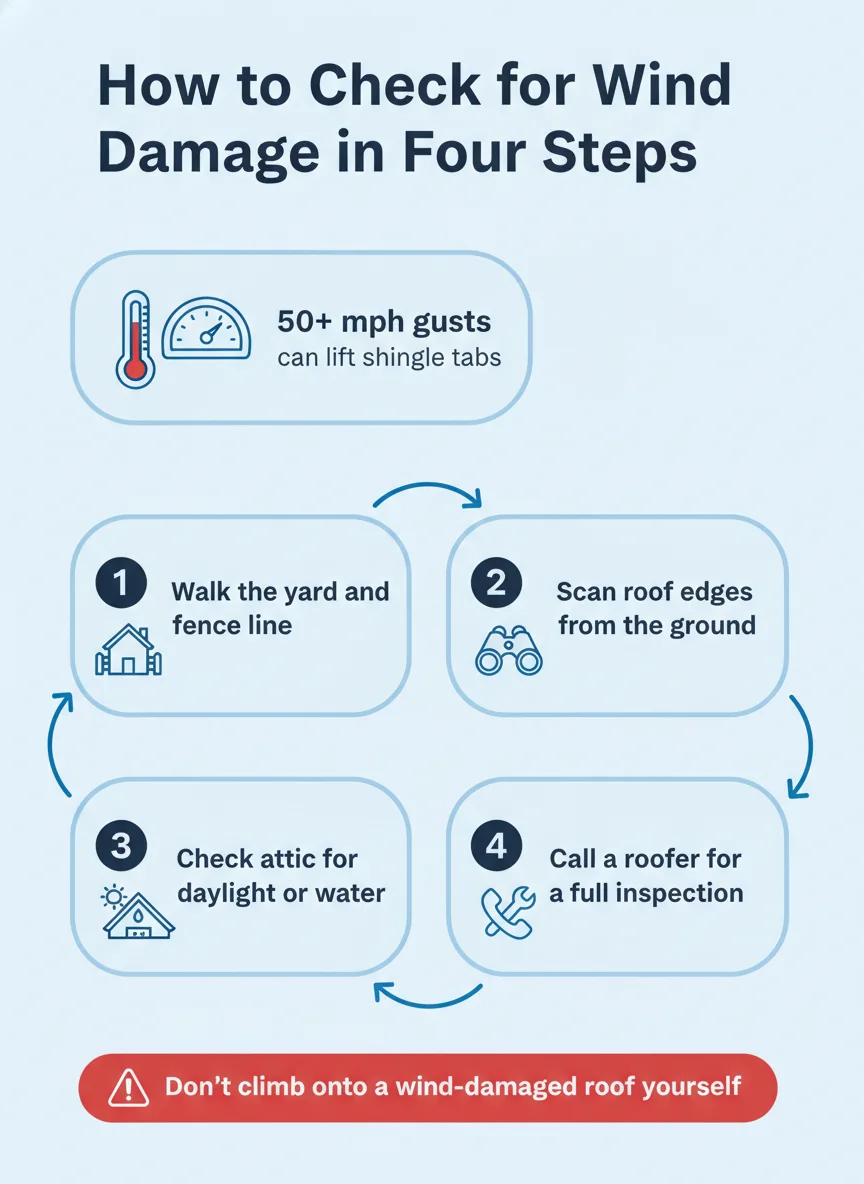
A thorough inspection goes well past counting the shingles sitting in your yard. Here's the general sequence a roofer follows to figure out the real scope of the damage.
- Ground-level walk-around: Checking the yard, gutters, and landscaping for shingle pieces, granules, and flashing debris gives a first read on how widespread the damage might be.
- Full roof walk: Every slope gets checked, not just the one visible from the street, since wind damage often concentrates on the side facing the storm.
- Seal strip and tab check: Shingles near the missing spots get checked by hand for lifted tabs, broken seals, and creasing, even if they look intact from a distance.
- Flashing and edge metal review: Wind-driven gaps often show up first at ridge caps, rake edges, and flashing around vents or chimneys.
- Deck check at exposed spots: Where shingles are missing, the deck underneath gets checked for water staining or soft spots that would change the scope of repair.
- Attic check: Daylight, water stains, or damp insulation in the attic confirm whether water has already gotten past the missing shingles.
- Written summary: A clear rundown of what's damaged, what's still sound, and whether a repair or full replacement makes sense closes out the inspection.
What you'll typically find once the inspection is done
Most wind inspections land in one of two places: a contained repair, or a recommendation to replace. Knowing what each looks like helps you understand the report you get back.
When it's a contained repair
If the damage is limited to a small section, the shingles are a reasonably recent style, and the deck underneath is dry and sound, a repair is usually the right call. The crew replaces the missing and compromised shingles, re-seals or hand-tacks the surrounding tabs that had broken seals, and checks the flashing in that area while they're up there.
This kind of repair is common after an isolated wind event and holds up well, provided the rest of the roof has useful life left in it. It's not a downgrade from replacement, it's simply the right scope for the damage that's actually there.
When replacement gets recommended instead
Replacement gets recommended when the damage is spread across multiple slopes, when the shingles are old enough that matching isn't realistic, or when the inspection turns up soft deck or water intrusion beyond the missing shingle spots. At that point patching one area just means another repair call after the next storm, on a roof that's already near the end of what it can give you.
If your roof was already getting close to the end of its expected lifespan before the storm hit, wind damage is often the event that tips the decision rather than the sole cause of it.
What a homeowner can check versus what needs a licensed roofer
You can safely check your own gutters, yard, and downspouts for shingle debris, and you can look at the roofline from the ground with binoculars for obviously bare patches or lifted tabs along the edges. That ground-level check is useful information to have ready when you call someone out.
What you shouldn't do is get on the roof yourself to assess seal strips or flashing. Walking a storm-damaged roof can crack shingles that were still salvageable and puts you at real risk on a surface that's already compromised. The seal strip checks, deck inspection, and flashing review all require someone trained to do it safely and know what they're looking at.
A licensed roofer also matters if you plan to file an insurance claim, since documentation standards and the back-and-forth with an adjuster go more smoothly with someone who does this regularly. That's a different skill set than simply replacing shingles, and it's worth asking about before you hire anyone for storm work.
Getting an honest read before you commit to either option
The right move after a windstorm is getting a full inspection before deciding anything, not guessing from the shingles in your yard. A roof that looks fine from the driveway can have broken seals across an entire slope, and a roof with a big bare patch can sometimes still be a straightforward repair depending on its age and condition.
If you're dealing with wind or hail damage in Englewood or anywhere around the Denver Metro, Precise Roofing can walk the roof, check the seal strips and deck, and give you a straight answer on repair versus replacement before any work starts.
Frequently asked questions
How do I know if wind damaged my roof?
The clearest signs are shingles in the yard, bald or discolored patches on the roof where the granule surface is missing, and shingle tabs that look lifted or curled at the edges. A roofer can confirm what's visible from the ground with a closer inspection, including checking the seal strips that hold each shingle down.
Can a few missing shingles mean the whole roof needs replacing?
Yes, sometimes. Wind strong enough to tear a few shingles off usually breaks the seal strip on dozens of shingles around them, even ones that look fine, and those will fail later unless the whole area is addressed, not just the obviously missing pieces.
Will new shingles match my old roof?
It depends on the age and brand of the existing shingles. Colors fade over the years, so a repair done on an older roof may show some contrast, while a roof under a few years old typically matches closely.
Is it safe to leave missing shingles until I can schedule a repair?
No, exposed roof deck lets water in with the next rain or snow, and in Colorado that can mean ice working into the gap during freeze-thaw cycles. It's worth getting a tarp or temporary cover on exposed spots right away and scheduling a repair quickly.
Does homeowners insurance cover wind damage to shingles?
Many homeowners policies cover sudden wind damage, though coverage details vary by policy and insurer. A roofer can document what they find and work alongside you and your insurance company through that process.