
What to Check the Morning After a Storm in the Denver Metro
A hard hail run or a night of sustained wind along the Front Range can leave marks on a house that aren't obvious from the driveway. Shingles bruise rather than tear, soft metal dents instead of cracking open, and water can find its way under a roof surface without ever showing up as an obvious hole. The damage is real even when it's quiet.
The morning after is the best time to look, while debris is still where it landed and before a second round of wind or rain scatters the evidence. A calm, methodical walk around the outside of the house, done from the ground, tells you most of what you need to know before anyone climbs a ladder.
Why the Morning-After Walk-Around Matters
Storm damage in Colorado tends to show up in layers. Some of it is visible right away, like a bent gutter or a shingle lying in the flower bed. Other damage, like a cracked flashing seal or a bruised shingle mat, won't show itself until weeks later as a slow leak or a shortened roof life. Catching the visible signs early gives you a head start on the damage you can't see yet.
Hidden Damage vs. Visible Damage
Visible damage is the easy part: missing shingles, dented downspouts, torn screens, debris in the yard. Hidden damage is harder, things like a shingle that's still nailed down but has lost its granule coating, or a flashing seam that shifted just enough to let water in during the next rain.
That's the gap a trained inspection is meant to close. A homeowner's ground-level walk-around is about spotting the obvious clues and deciding whether a closer look is warranted, not about diagnosing every possible issue yourself.
Why Timing Matters
Photographing and noting damage soon after a storm matters if you end up filing an insurance claim later. Debris gets raked up, rain washes granules out of the gutters, and the clear picture of what happened fades fast. A few photos taken the next morning can matter more than they seem to at the time.
Timing also matters for the roof itself. A small amount of water finding its way under a lifted shingle or around a loose vent boot gets worse every time it rains again, so a few days' delay in checking can turn a simple repair into a bigger one.
| Area | What to Look For | Why It Matters |
|---|---|---|
| Roof surface | Missing or displaced shingles, bare spots, granules on the ground | Exposed decking lets water in with the next rain |
| Gutters & downspouts | Dents, granule buildup, sagging or pulled-away sections | Clogged or damaged gutters push water toward the fascia and foundation |
| Siding & screens | Dents, cracks, torn or punctured window screens | Confirms the direction and force of the wind or hail |
| Attic | Daylight through the roof deck, damp insulation, musty smell | The clearest sign water has already gotten through |
The Parts of Your Roof and Yard Most Worth Checking
Shingles are the first thing most people think to check, but soft metal components often tell the story faster. Roof vents, flashing, AC unit covers, and gutter corners are softer than shingles, so they dent under hail before the shingles show obvious damage. A row of small dents on a vent cap is often the first real clue a storm did more than make noise.
Gutters and downspouts deserve their own look, separate from the roof. Granules collecting at the bottom of a downspout are a sign shingles lost material somewhere above, even if you can't see it from the ground. A sagging or pulled gutter section also means water isn't being carried away from the house the way it should be, which adds a second problem on top of any roof damage.
Step-by-Step: Your Next-Morning Walk-Around
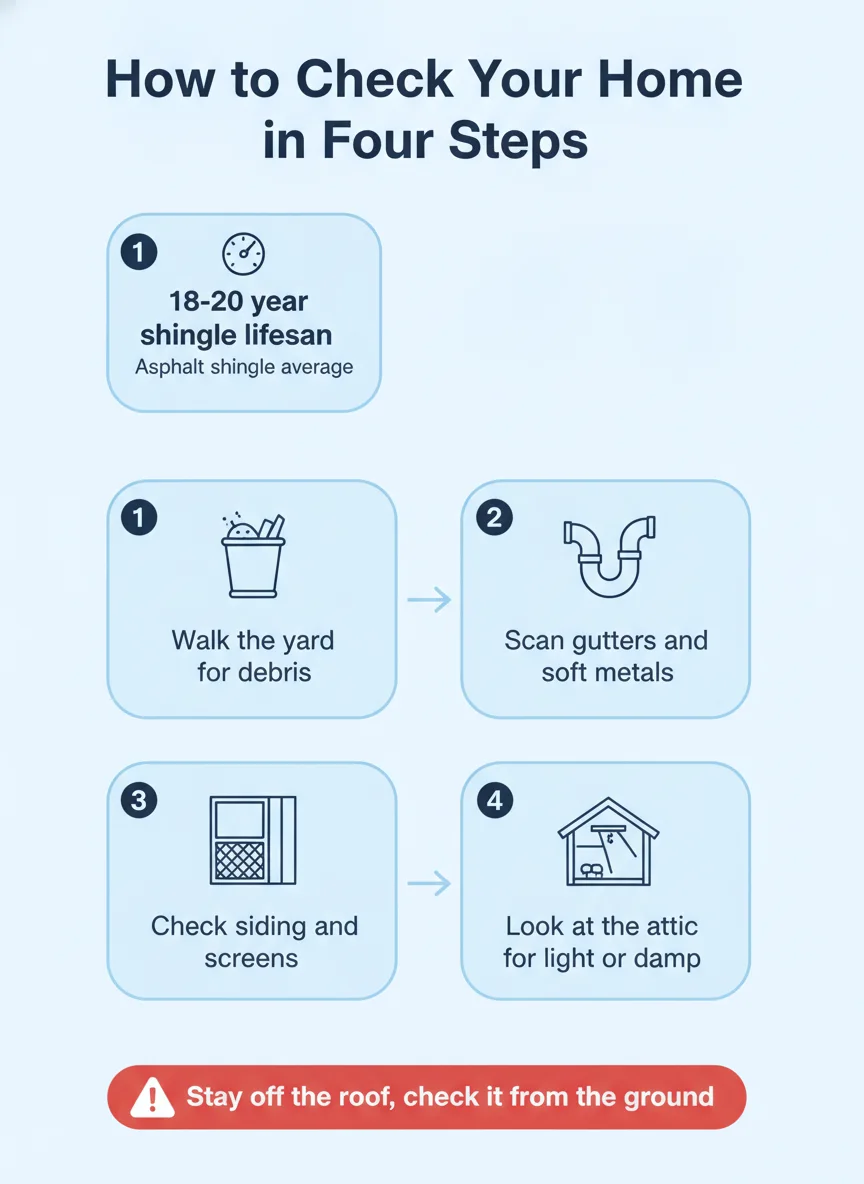
Work your way from the yard inward, and keep your phone handy for photos as you go. None of these steps require a ladder or getting on the roof.
- Walk the yard: Look for shingle pieces, granules, torn screen material, or anything blown off the roof or siding overnight.
- Scan from the ground: Stand back from the house and look at each roof slope for bare spots, lifted shingles, or missing sections.
- Check gutters and downspouts: Look for dents, sagging sections, and granule buildup collecting in the corners or at the base of downspouts.
- Inspect siding and screens: Walk the perimeter checking for dents or cracks, which help confirm whether hail or wind was the main cause.
- Check the attic: Look for daylight coming through the roof deck, damp insulation, or a musty smell, all signs water has already gotten in.
- Photograph everything: Take wide shots of each side of the house and close-ups of specific damage before any cleanup begins.
- Call for an inspection: If you find any of the signs above, schedule a closer look rather than waiting to see if it gets worse on its own.
What the Damage You Find Usually Means
Scattered Granules and Dented Metal
Granules in the yard or gutters mean the hail was hard enough to knock the protective coating off your shingles, even if you can't see a hole or crack. Dented metal on vents, gutters, or AC covers is a useful stand-in for hail size, since it's often easier to see than bruising on the shingles themselves.
Neither of these findings means the roof needs to be replaced tomorrow, but both are reasons to get it looked at. Our roof inspections are built around exactly this kind of morning-after question.
Daylight or Dampness in the Attic
Daylight showing through the roof deck or a damp patch in the attic insulation means water, or at least outside air, is already finding a way in. This is the clearest sign that a storm caused more than cosmetic damage and that a repair shouldn't wait.
A musty smell without visible dampness is worth noting too. It can mean moisture got in and dried before you checked, which still points to a gap somewhere in the roof system that needs to be found and sealed.
DIY vs. Calling a Pro After a Storm
The ground-level walk-around is something every homeowner can and should do themselves. Checking the yard, looking up at the roofline, scanning gutters and siding, and peeking into the attic all take ordinary observation, not a license or specialized tools.
Getting on the roof itself is a different matter. Walking a wet or storm-damaged roof risks both your safety and further damage to shingles that may already be loosened, and it's easy to miss subtle signs like a bruised mat or a shifted flashing seam without training.
Anything involving the insurance process is also worth handing to a professional from the start. Our team inspects and documents the damage, then works with you and your insurance company through the claim and the install, so the paperwork and the repair move together instead of stalling each other out. Homeowners in Englewood and across the metro can also read our guide to hail and wind damage for a closer look at what specific signs usually mean.
Getting Ahead of Small Damage Before It Grows
Most storm damage doesn't announce itself with a dramatic leak the same night. It shows up as a few granules, a dented vent cap, or a faint damp smell in the attic, and it's easy to talk yourself out of worrying about any one of those on its own.
The next-morning check is worth the twenty minutes it takes, because small storm damage caught early is almost always cheaper and simpler to fix than the same damage found six months later after a few more storms have had a turn at it. Precise Roofing has handled that call for Denver Metro homeowners for more than 20 years.
Frequently asked questions
What should I check first after a hailstorm or high wind?
Start in the yard and from the ground, not on the roof. Walk the perimeter of your house looking for shingle granules, pieces of flashing, or dented soft metals like vents and gutters, then look up at the roofline with binoculars before deciding whether it needs a closer look.
Is it safe to go up on my roof after a storm?
It's best to stay off the roof yourself, especially right after a storm when surfaces are wet and shingles may be loosened. A ground-level walk-around plus photos from a window or ladder gives you enough information to decide whether to call for a [roof inspection](/services/roof-inspections).
How do I know if hail actually damaged my roof?
Hail damage on asphalt shingles often looks like small dark bruises or spots where granules have been knocked loose, rather than obvious holes. It's easy to miss from the ground, which is why a trained eye checking the slopes and the metal components is worth the call.
What should I photograph after storm damage?
Photograph anything out of place before you clean it up: shingle pieces in the yard, dented gutters or vent caps, damaged screens, and any water stains appearing on ceilings or in the attic. Wide shots of each side of the house plus close-ups of specific damage give an adjuster and your roofer a clear record.
When should I call a roofer after a storm?
Call if you find granules in the yard or gutters, dented metal, missing shingle pieces, or any sign of water inside the house, even a small ceiling stain. Our team can walk the [storm and hail damage](/services/storm-hail-damage) process with you and document what we find.