
Why Shingle Grade Matters for Denver Metro Homes
Walk through a Denver Metro neighborhood and you'll see roofs that look similar from the street but are built from completely different shingle grades underneath. The grade affects how the roof handles wind, hail impact, UV exposure at altitude, and how long it lasts before it needs replacing again. For a homeowner comparing quotes or planning ahead for a roof replacement, knowing the difference between three-tab, architectural, and designer shingles is the difference between an apples-to-apples comparison and a guessing game.
This isn't just marketing language. Each grade is built differently, carries a different wind rating, and has a different expected service life based on public manufacturer and trade data. Understanding the build helps explain why two quotes for the same square footage can come in with very different material costs, and why a cheaper bid isn't automatically the better deal.
Why the Grade Changes How a Roof Performs
Every asphalt shingle starts with a fiberglass mat coated in asphalt and surfaced with mineral granules. What changes between grades is how many layers get laminated together, how thick the final product is, and how the tabs are cut or staggered. More layers generally mean more weight, a thicker profile, and a stronger wind and impact rating.
Three-Tab Shingles: The Economy Grade
Three-tab shingles are a single flat layer of asphalt cut into three even tabs, giving the roof a uniform, flat appearance with no shadow lines. They're the lightest and thinnest of the three grades, which also makes them the least expensive to manufacture and install. Industry lifespan figures for three-tab shingles tend to run shorter than laminated grades, and their wind ratings are typically on the lower end of what's available today.
They're still a legitimate option for budget-conscious projects or for matching an existing three-tab roof, but fewer manufacturers are putting R&D into this grade compared to architectural lines. If a quote comes in noticeably lower than others you've received, it's worth asking whether three-tab shingles are the reason, since that's a material difference worth knowing before you decide.
Architectural and Designer Shingles: Built-Up Protection
Architectural shingles (sometimes called laminated or dimensional shingles) are built from two layers fused together, creating a thicker shingle with a staggered, shadowed look that mimics wood shake from a distance. That extra layer adds weight and rigidity, which generally translates to a higher wind rating and a longer expected service life than three-tab. This grade has become the standard choice for most residential replacements across the industry.
Designer shingles push the build further still, often using heavier mats, more pronounced shadow lines, and shapes designed to mimic slate or cedar shake more convincingly. They're the heaviest and most expensive asphalt option, generally carrying the longest lifespan range of the three grades and the strongest impact and wind ratings. Homeowners who want a premium look without the weight and cost of real slate often land on designer shingles.
| Grade | Build | Typical Lifespan (industry range) |
|---|---|---|
| Three-tab | Single flat layer, uniform tab cutouts | 12-20 years |
| Architectural (laminated) | Two layers fused for a dimensional look | 20-30 years |
| Designer | Heaviest multi-layer build, mimics slate or shake | 30-50 years |
What's Actually Inside a Shingle
Underneath the surface granules, every asphalt shingle shares the same basic recipe: a fiberglass reinforcing mat, a layer of asphalt that waterproofs it, and mineral granules on top that block UV rays and give the shingle its color. What separates the grades is how many of these layers get stacked and fused together, and how much asphalt and mat material goes into each one.
That build also determines the shingle's wind rating, which is tested and published by manufacturers and matters a great deal in a region that sees high-wind events along the Front Range. A thicker, multi-layer shingle has more material holding it down and more surface area for adhesive sealant strips to bond, which is part of why architectural and designer grades generally outperform three-tab in wind testing.
Step-by-step: How to Check Which Grade Is On Your Roof
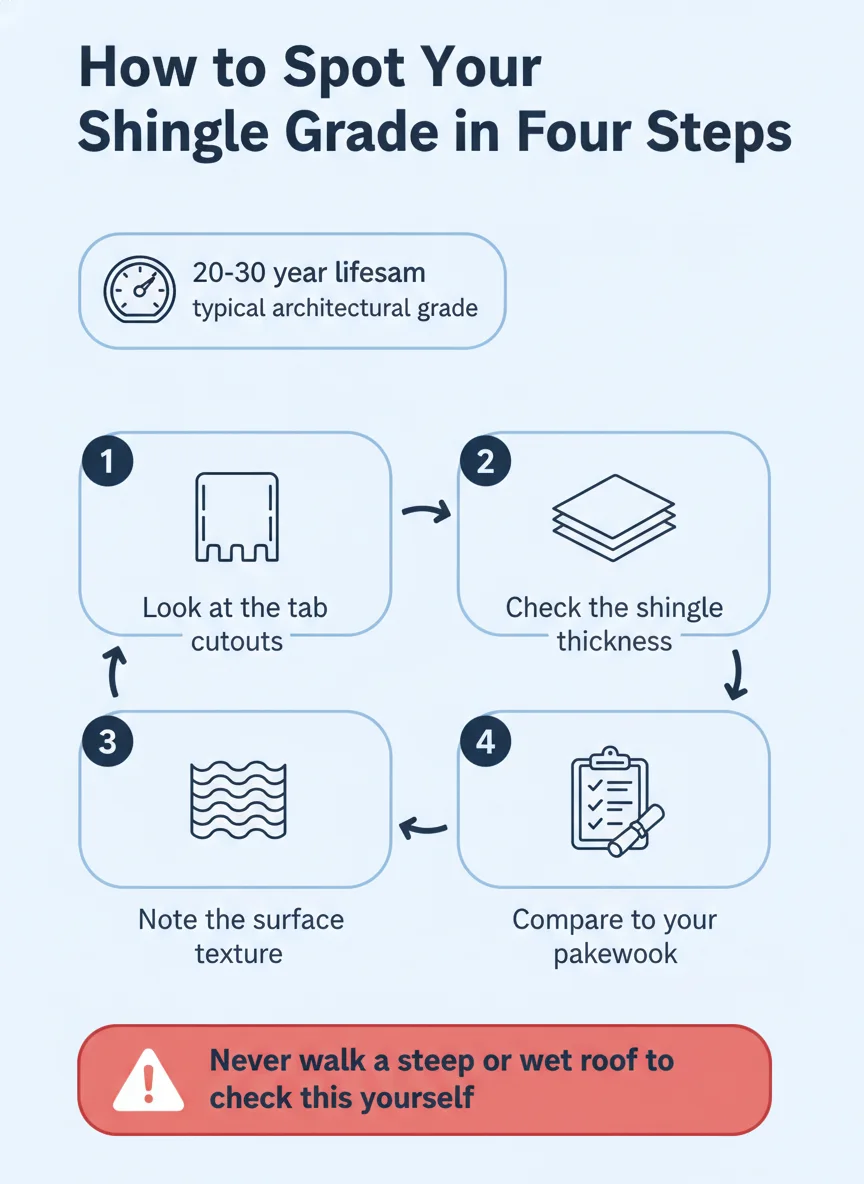
You don't need to get on the roof to get a rough read on what grade you have. These checks work from the ground or from a ladder at the eaves, and they'll tell you enough to have an informed conversation with whoever quotes your next project.
- Look at the tabs: Flat, evenly spaced cutouts with no shadow lines usually point to three-tab shingles.
- Check the thickness: Hold a spare shingle, if you have one, or look at the exposed edge; a noticeably thick, layered edge suggests architectural or designer grade.
- Compare the pattern: Irregular, staggered tab sizes with visible depth usually mean a laminated shingle rather than three-tab.
- Pull old paperwork: A permit record, old invoice, or manufacturer warranty card will often name the exact product installed.
- Look for granule loss: Bald patches or granules in the gutters can signal an aging shingle regardless of grade, which is worth noting alongside the grade itself.
- Schedule an inspection: A trained eye can confirm the grade and flag any wear in the same visit, which is faster and safer than guessing from the ground.
What the Signs on Your Roof Usually Tell You
Signs You Likely Have Three-Tab Shingles
If your roof looks flat and uniform from the curb, with no visible depth or shadowing between tabs, you're probably looking at three-tab shingles. These roofs also tend to show curling or cracking sooner than laminated grades, especially on older installs that have been through repeated freeze-thaw cycles and intense UV exposure at altitude.
Granule loss shows up differently on three-tab roofs too, since the single thin layer has less material to lose before the underlying mat becomes visible. If you're noticing bare spots or a roof that looks flatter and older than its neighbors, that's often tied to the grade as much as the age, and it's a reasonable prompt to get a professional opinion before a small issue becomes a leak you can't ignore.
Signs You Likely Have Architectural or Designer Shingles
A roof with visible shadow lines, varied tab shapes, and a thicker, more textured look is almost always architectural or designer grade. These roofs tend to age more gracefully, holding their shape and color longer before granule loss becomes noticeable, which lines up with their longer published lifespan ranges.
Even with the better build, these shingles aren't immune to Colorado's hail and wind, so periodic checks still matter. The grade buys you a longer runway, not a free pass, and a roof that's otherwise healthy but past the midpoint of its expected life is still worth watching for the signs that it's nearing the end.
DIY vs Calling a Pro
Identifying the shingle grade on your own roof is something most homeowners can do from the ground or a ladder with a careful look, and it's a reasonable first step before calling anyone out. Pulling old paperwork or photos from a previous project is another easy DIY check that can confirm the grade without any climbing at all.
Where this needs a licensed professional is anything involving getting on the roof itself, assessing hidden wear like soft decking or failed sealant strips, or deciding whether a given grade is still performing as expected for its age. Walking a roof without training or the right equipment is a real fall hazard, and it's easy to miss damage that isn't visible from the eaves.
A professional inspection also gives you something a ground-level check can't: a clear read on the roof's actual remaining life, not just which grade is up there. That combination of facts, grade, age, and condition, is what you need to plan a replacement on your own timeline instead of reacting to a leak.
Choosing the Right Grade for Your Next Roof
There's no single "best" grade for every home. Three-tab still has a place for budget-driven projects or matching an existing roof, architectural has become the practical standard for most replacements, and designer shingles earn their keep on homes where the owner wants a premium look and the longest realistic lifespan from asphalt. Knowing the differences means you can ask for a specific grade by name instead of comparing quotes blind.
If you're weighing options for a home in Denver or anywhere else across the metro, a straightforward conversation about grade, budget, and expected lifespan is the right starting point. Precise Roofing walks homeowners through exactly that conversation before any work begins.
Frequently asked questions
What is the difference between three-tab and architectural shingles?
Three-tab shingles are a single flat layer cut into even tabs, while architectural shingles are laminated from two layers to create a thicker, dimensional look. The extra layer in an architectural shingle generally gives it a longer service life and a higher wind rating than a three-tab.
Are designer shingles worth the extra cost?
Designer shingles are worth it when the goal is matching the look of slate, shake, or tile without the weight or cost of real stone or wood. They're the heaviest, most durable asphalt option, so they make the most sense on homes where curb appeal and longevity both matter.
Can I mix shingle grades on one roof?
You generally shouldn't mix grades on the same roof plane, since the thickness, profile, and nailing pattern differ between grades and can create an uneven surface or voided warranty. A single consistent grade across the whole roof is the standard approach.
Do three-tab shingles still get installed today?
They're installed less often than they used to be, since most manufacturers and roofing crews have shifted toward architectural shingles as the standard replacement product. Three-tab shingles are still around but have become more of a budget or specialty option.
How do I know what grade is currently on my roof?
The cutout pattern is the quickest visual clue. Flat, evenly spaced notches usually mean three-tab, while a shingle with varied tab sizes and visible shadow lines is typically architectural or designer grade, and a [roof inspection](/services/roof-inspections) can confirm it along with the roof's overall condition.