
Why This Decision Matters More in Colorado
Along the Front Range and up into the mountains, a roof has to deal with intense UV at altitude, wide temperature swings between day and night, heavy snow loads in some areas, and the occasional severe hailstorm. Asphalt shingles and metal roofing both hold up to this climate, but they do it in different ways and at different price points. Picking between them is one of the biggest decisions a homeowner makes on a roof replacement, so it's worth understanding the real tradeoffs before a crew shows up.
There is no universally correct answer here. A ranch-style home on a quiet residential street has different priorities than a mountain cabin that sees heavy snow, and a homeowner planning to sell in five years thinks about this differently than one settling in for thirty. The goal of this guide is to lay out how each material actually performs so you can match it to your situation instead of just picking whichever one a neighbor has.
How Each Material Is Built and Why It Behaves Differently
Asphalt shingles are layered, overlapping tabs made of a fiberglass mat coated in asphalt and mineral granules. They're flexible, relatively light, and designed to shed water through overlap rather than through a sealed surface. Metal roofing, whether standing seam panels or screw-down panels, works as a continuous or near-continuous barrier that sheds water and snow quickly off a sloped surface. That structural difference is the root of almost every other difference between them.
Asphalt shingles in practice
A well-installed shingle roof relies on proper nailing, underlayment, and attic ventilation to perform through Colorado's freeze-thaw cycles. Shingles are rated by class, with impact-resistant options designed specifically to handle hail better than standard shingles. They're also the most common roofing material on residential homes, which means most crews, suppliers, and insurance adjusters are deeply familiar with how they age and fail.
The granule coating is what protects the asphalt mat underneath from UV breakdown, and granule loss over the years is the main visible sign a shingle roof is aging. Flashing points around chimneys, skylights, and vents remain the weak spots on any shingle roof regardless of brand or grade, which is why roof inspections tend to focus there first.
Metal roofing in practice
Standing seam panels interlock with raised seams that keep water out without exposed fasteners, which is part of why they tend to outlast screw-down systems. Screw-down panels cost less upfront but rely on exposed fastener washers that can wear out and need replacing over the life of the roof. Both styles shed snow faster than shingles, which matters on steep mountain roofs where snow load is a real concern.
Metal expands and contracts more with temperature swings than asphalt does, so a correctly installed system accounts for that movement with proper fastening and panel spacing. Done right, this isn't a weakness, it's just a different set of installation details that an experienced crew already knows to handle.
| Factor | Asphalt Shingles | Metal Roofing |
|---|---|---|
| Typical service life | Roughly 18-22 years in Colorado UV | 40-50+ years with proper install |
| Hail performance | Impact-resistant grades help, standard shingles bruise easier | Dents cosmetically, rarely fails structurally |
| Noise in rain or hail | Quiet by nature | Louder without solid decking and underlayment, manageable with them |
| Upfront investment | Lower material and labor cost generally | Higher upfront, lower long-term replacement frequency |
What's Actually Happening Up There: The Roof System, Not Just the Surface
Neither material works in isolation. Underlayment, decking condition, flashing, and attic ventilation all affect how long either roof actually lasts. A premium metal panel installed over rotted decking or poor underlayment will underperform a well-installed shingle roof, and the reverse is just as true. This is part of why the installing crew matters as much as the material choice itself.
Ice and snow management is another system-level consideration specific to Colorado. Metal's slick surface sheds snow fast, which is good for load but means snow can slide off in a sheet, so eave details and gutter placement need to account for that. Shingles hold snow longer, which adds weight but avoids the sudden-slide issue. Either way, gutters sized and positioned correctly matter regardless of which material sits above them.
Step-by-Step: How to Decide Between Them
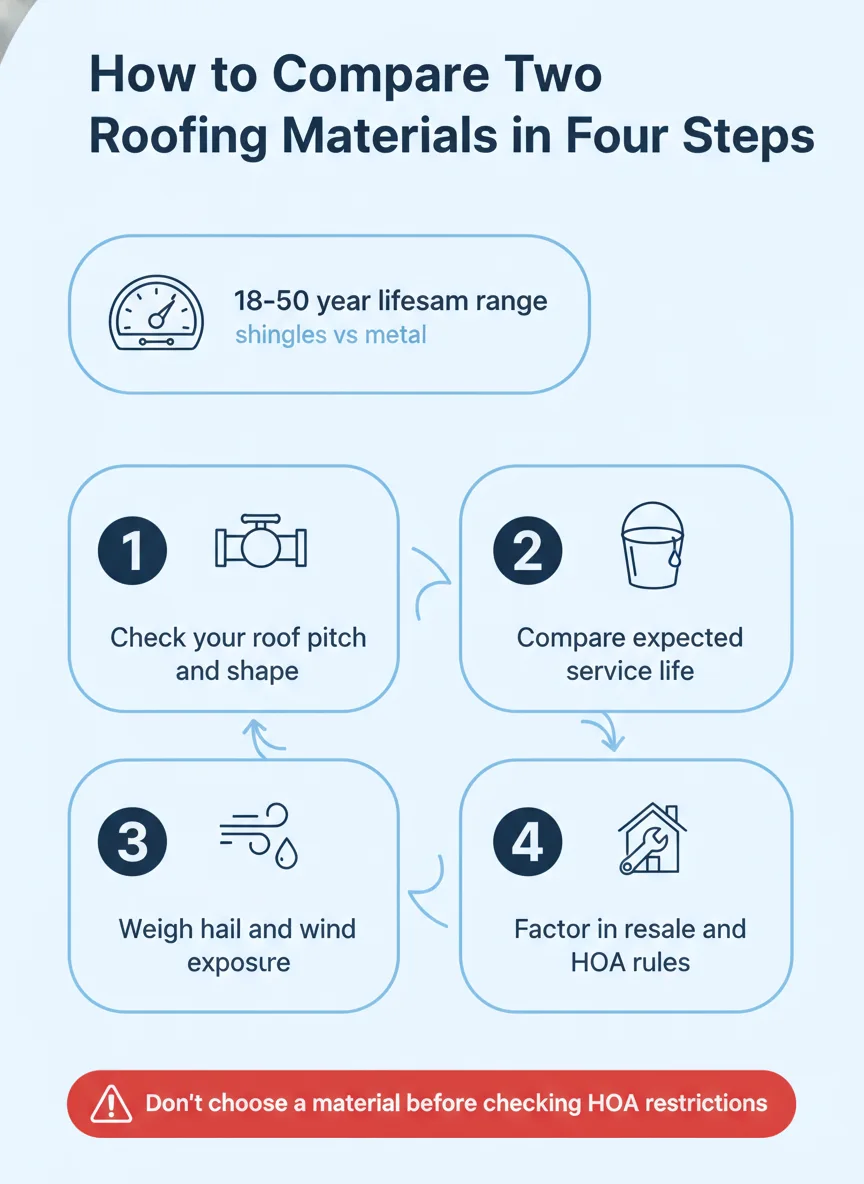
Working through these questions in order gives a clearer answer than picking a material first and justifying it after.
- Check roof pitch: Steep pitches shed snow and water fast with either material, but very low-slope sections may need a flat roofing system instead of either option.
- Assess hail exposure: Homes on the plains and foothills that see frequent hail benefit most from metal or impact-resistant shingle grades.
- Review HOA rules: Some HOAs restrict panel colors or finishes, so confirm what's allowed before you commit to a look.
- Estimate ownership timeline: A longer hold time favors metal's lifespan advantage; a shorter one may not justify the higher upfront cost.
- Factor in noise tolerance: If bedrooms sit directly under the roof deck, ask how underlayment and decking will address sound.
- Get a written quote on both: A straightforward roof replacement quote should spell out materials, underlayment, and warranty terms for either option side by side.
What You'll Notice Over Time With Each Material
Living with an asphalt shingle roof
Shingle roofs are familiar to most homeowners because they're the most common residential material in the country. Maintenance mostly means watching for granule loss, curling edges, and flashing wear, and scheduling a repair before small issues become leaks. Most insurance companies and crews are well versed in shingle repair, which tends to make repairs faster to source and schedule.
The visible aging process is gradual, which gives homeowners time to plan a replacement rather than being caught off guard. A roof nearing the end of its service life usually shows curling, bald patches, and granules collecting in gutters well before a leak actually develops.
Living with a metal roof
Metal roofs ask for less routine maintenance but reward a periodic check of fastener integrity, especially on screw-down systems where washers can wear out over decades. Paint finishes can fade or chalk over many years in high-altitude UV, which is a cosmetic issue rather than a functional one in most cases.
Because metal roofs last so much longer, homeowners often go an entire ownership period without needing a full replacement at all, just occasional fastener or sealant maintenance. That long runway is the core appeal for people planning to stay put.
What a Homeowner Can Handle vs What Needs a Licensed Roofer
Homeowners can reasonably compare material samples, review HOA guidelines, and ask contractors detailed questions about underlayment and warranty terms before signing anything. Walking the roof to look for obvious wear from the ground with binoculars, or checking the attic for daylight or moisture, are also safe DIY steps that inform the conversation.
Actually installing either material is not a DIY project. Proper fastening patterns, underlayment selection, flashing details around penetrations, and panel or shingle layout all affect long-term performance and voiding or preserving a manufacturer warranty. A fall off a steep Colorado roof is also a real risk that isn't worth taking to save on labor.
A licensed roofer also knows how local code requirements and your home's specific pitch, decking condition, and ventilation affect which installation details matter most. That's the kind of judgment that only comes from doing the work repeatedly, not from a weekend project.
Bringing It Back to Your Roof
There's no single right answer between asphalt shingles and metal roofing, only the right answer for your home, your budget, and how long you plan to stay. A roof that's reaching the end of its life is also a good moment to revisit ventilation and flashing details regardless of which material you land on, since those affect performance as much as the surface material itself.
If you're weighing the two options for a home anywhere in the Denver Metro area or beyond, Precise Roofing can walk the roof, explain what each material would mean for your specific house, and lay out the real differences in writing before you decide.
Frequently asked questions
Is metal roofing worth it in Colorado?
For many homeowners, yes, because metal roofing generally outlasts asphalt shingles and tends to handle hail and wind better. The tradeoff is a higher upfront cost and, on some homes, more noise during rain or hail unless the roof has solid decking and underlayment.
Do metal roofs dent from hail in Colorado?
Lighter-gauge metal can dent in a significant hailstorm, though it rarely fails the way a cracked or bruised shingle can. Cosmetic denting is a common insurance conversation point, so ask about the panel gauge and any impact-resistant rating before you choose.
Are metal roofs noisier than shingles in the rain?
They can be, but the difference is smaller than most people expect once solid decking, underlayment, and insulation are factored in. A metal roof installed over a properly built deck is much quieter than the exposed-barn-roof sound people picture.
Which roofing material lasts longer in Colorado's climate?
Metal roofing typically outlasts asphalt shingles by a wide margin, though both materials have to deal with the same UV exposure, temperature swings, and occasional hail that come with Colorado weather. Proper installation and attic ventilation affect the lifespan of either material more than the brand does.
Does a metal roof increase home resale value?
It often does, since buyers tend to view metal roofing as a long-term, low-maintenance upgrade. The actual bump depends on your neighborhood and how long you plan to own the home before the asphalt shingle equivalent would need replacing.