
Why the Timeline Question Matters in Colorado
Homeowners across the Denver Metro ask this question before they ask almost anything else, and for good reason. A roof replacement means a crew on your property, debris coming off the house, and noise inside the home for however long it takes, so knowing the real range helps you plan around it instead of guessing.
The honest answer is that most houses in Colorado are done faster than people expect, but the number depends on a handful of factors that are easy to spot before work even starts. Roof size, pitch, material, layers of old roofing, and the week's weather all play a role, and a good Roof Replacement estimate should walk you through which of those apply to your specific house.
What Actually Sets the Clock on a Reroof
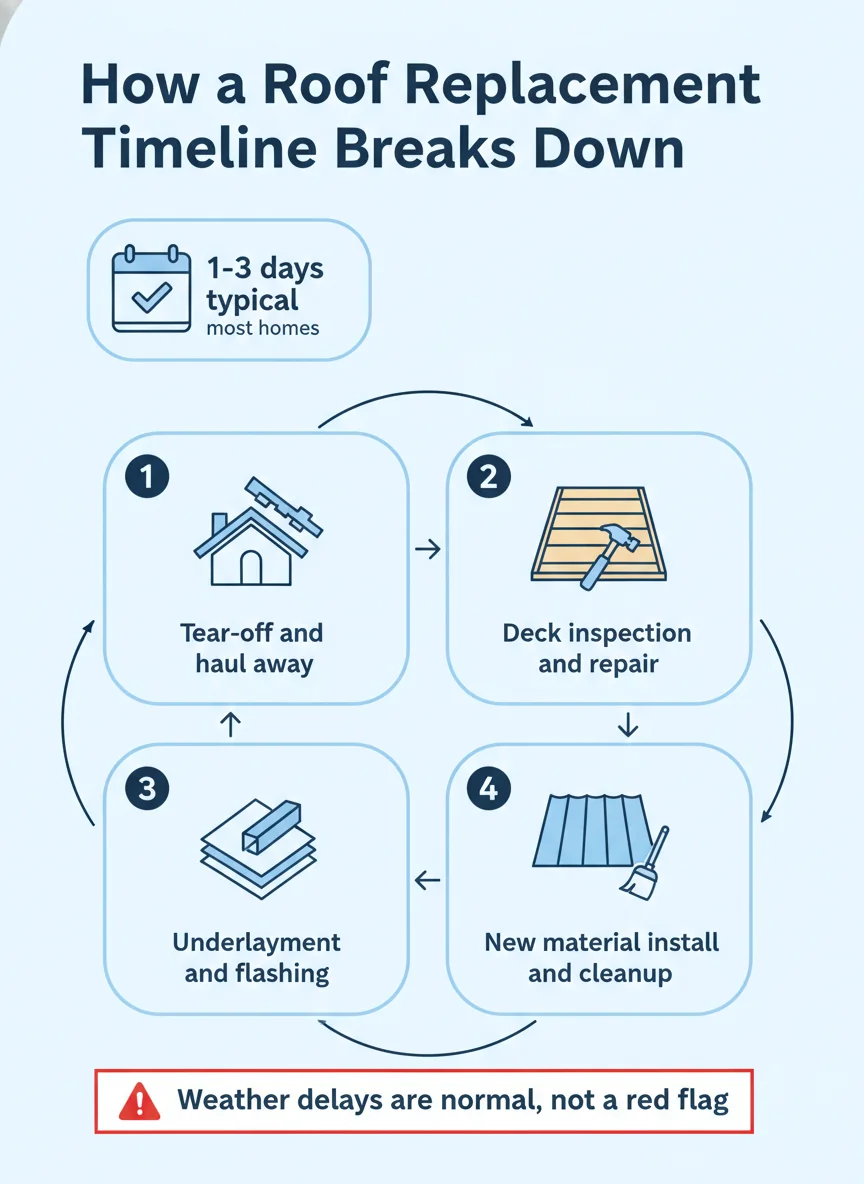
A roof replacement is really several jobs stacked in sequence: tear-off, deck inspection, underlayment, flashing, new material, and cleanup. Each step depends on the one before it, so a delay early in the day pushes everything else back. Crews size the job in advance, but conditions discovered mid-tear-off can still shift the schedule.
Roof Size and Pitch
A small, simple ranch with a low pitch goes faster than a large two-story home with steep slopes, dormers, and multiple valleys. Steeper roofs slow crews down because footing and material staging take more care, and complex rooflines mean more flashing detail around every edge and penetration.
Square footage matters too, but pitch and complexity usually matter more. A 3,000 square foot simple gable can move faster than a 1,800 square foot home with a dozen roof planes, since every seam and valley adds labor time regardless of total area.
Material Choice
Asphalt shingle systems are generally the fastest to install because the material lays flat in large sections. Metal roofing, especially standing seam, takes longer because panels are measured, cut, and fastened with more precision. Tile and flat systems each carry their own install rhythm, and a crew experienced in shingle, metal, tile, and flat systems can give you a realistic estimate for your specific material.
Layers also matter. If your roof already has two layers of shingles from past work, the tear-off step alone takes meaningfully longer than a single-layer tear-off, since more material has to come off and get hauled away before anything new goes down.
| Roof Type | Typical Install Pace | What Slows It Down |
|---|---|---|
| Asphalt shingle | Fastest of common materials | Multiple old layers, steep pitch, many valleys |
| Metal (standing seam) | Slower, more precision work | Custom panel cuts, trim and flashing detail |
| Tile | Slower, handled with care | Weight distribution, breakage during handling |
| Flat (TPO, EPDM, modified bitumen) | Varies by square footage | Seam welding, drainage detail, large commercial scale |
What's Happening Underneath the Surface
Most of the visible work is the new material going down, but the parts underneath drive both the timeline and the long-term performance of the roof. Underlayment, flashing, and the decking itself all get checked and addressed before a single new shingle, panel, or tile goes on.
Decking is the wood layer directly under the roofing material, and it's only fully visible once the old roof comes off. If a crew finds soft or rotted decking during tear-off, that wood gets replaced before work continues, which is the single most common reason a job runs a bit longer than the original estimate.
Step-by-Step: What Happens on Replacement Day
Knowing the sequence helps explain why some days run long and others wrap early. Here's the general order a reroof follows from start to finish.
- Setup and protection: Crews stage material, set up ladders and safety gear, and lay tarps around the house to catch debris before any tear-off starts.
- Tear-off: Old roofing material comes off down to the decking, and debris gets loaded for haul-away throughout the day rather than piling up.
- Deck inspection: The exposed decking gets checked for soft spots, rot, or damage, and any bad sections get replaced before moving forward.
- Underlayment: A water-resistant barrier goes down across the whole deck to protect the home if weather moves in before the final material is installed.
- Flashing: Metal flashing goes in around chimneys, vents, skylights, and valleys where water concentrates and leaks are most likely to start.
- Material install: The new shingles, panels, tile, or flat system goes down according to the manufacturer's install pattern for that product.
- Cleanup and final check: Crews do a magnetic sweep for nails, haul away remaining debris, and walk the roof one more time before calling the job done.
What You'll See During and After the Job
Replacement day is loud and visible, and knowing what's normal helps you tell the difference between expected process and an actual problem.
During the Job
Expect hammering, nail guns, and the sound of material being dropped off at the roof's edge. Dust and small debris will fall around the perimeter of the house even with tarps down, and vibration can rattle pictures or light fixtures inside, especially on upper floors.
It's normal for crews to pause work if wind picks up or rain moves in, since wet decking and flying material are safety issues, not just scheduling ones. A paused day isn't a sign anything went wrong, it's a sign the crew is being careful with your house.
After the Job
A finished reroof should leave your yard, driveway, and gutters clear of debris and nails. Photos of the roof before, during, and after the work are a good habit for any homeowner to ask for, since they give you a record of what the deck and flashing looked like underneath before everything got covered up again.
If you notice loose material, exposed nails, or debris left behind after the crew leaves, that's worth a call back right away rather than something to live with until the next storm reveals it.
What a Homeowner Can Handle vs. What Needs a Licensed Crew
There's very little about a full roof replacement that's reasonable for a homeowner to take on solo, and that's true across every material type. Working at height, handling heavy bundles, and sequencing underlayment and flashing correctly all require training, proper fall protection, and the right tools.
What a homeowner can do is prep the property. Moving vehicles away from the driveway, bringing in patio furniture or breakables near the house, and letting a crew know about sprinkler heads, skylights, or solar equipment ahead of time all help the day go smoother and protect anything near the work zone.
The actual tear-off, deck repair, underlayment, flashing, and material installation belong with a licensed crew, since a mistake in any one of those steps can show up as a leak months or years later and often costs more to fix than it would have cost to do right the first time. If you're weighing whether your current issue is a quick fix or a full Roof Replacement, a straightforward Roof Inspections visit will usually settle it, and that same logic applies to the repair vs. replace question covered here.
Planning Around the Timeline
The best way to plan around a reroof is to build in a buffer rather than schedule tight around a single estimated day count. Weather in Colorado changes quickly, and a crew that pauses for safety on day one of a two-day job isn't falling behind, they're working the way a careful crew should.
If you're in Englewood or anywhere else in the Denver Metro and want a realistic timeline for your specific roof, Precise Roofing will walk the roof, explain what the tear-off is likely to find, and give you a day count based on your actual house rather than a generic number.
Frequently asked questions
How many days does it take to replace a roof?
Most single-family homes in the Denver Metro are torn off and reroofed in one to three days once the crew is on site. Larger homes, steep pitches, or roofs needing deck repair can stretch that timeline, and multi-layer tear-offs add time too.
Does roof replacement take longer in winter?
It can, but not always. Cold slows down how fast some materials seal and how long crews can safely work each day, so a winter job may spread across more calendar days even if the actual labor hours are similar.
What slows down a roof replacement the most?
Weather is the biggest factor, since high wind, rain, or heavy snow can pause work mid-job for safety. Rotted decking discovered during tear-off is the second most common delay, since that wood has to be replaced before anything goes back down.
Can I stay in my house during a roof replacement?
Yes, most homeowners stay home during a replacement. Expect noise, vibration, and debris falling past windows, and plan to move vehicles away from the driveway and keep pets inside during work hours.
How long does a commercial roof replacement take compared to a house?
Commercial roofs usually take longer because the square footage is larger and the systems, like TPO or modified bitumen, install in phases to keep the building weathertight overnight. A small house reroof and a commercial building reroof are not on the same clock.