
Why Roof Replacement Quotes Look So Different
If you've gathered a few quotes for a roof replacement around Denver Metro, you've probably noticed the numbers don't line up. One bid might be a few thousand dollars lower than another for what looks like the same job, and it's tempting to just go with the lowest one. But a roof replacement isn't a single line item, it's a collection of decisions about materials, labor, and what happens to the roof deck once the old layer comes off.
Understanding what goes into the price helps you spot a quote that's missing something important versus one that's genuinely a better fit for your home. It also sets realistic expectations before a crew ever shows up, so you're not surprised when a contractor finds rotten decking mid-project or recommends a different material than you expected.
What Actually Moves the Number
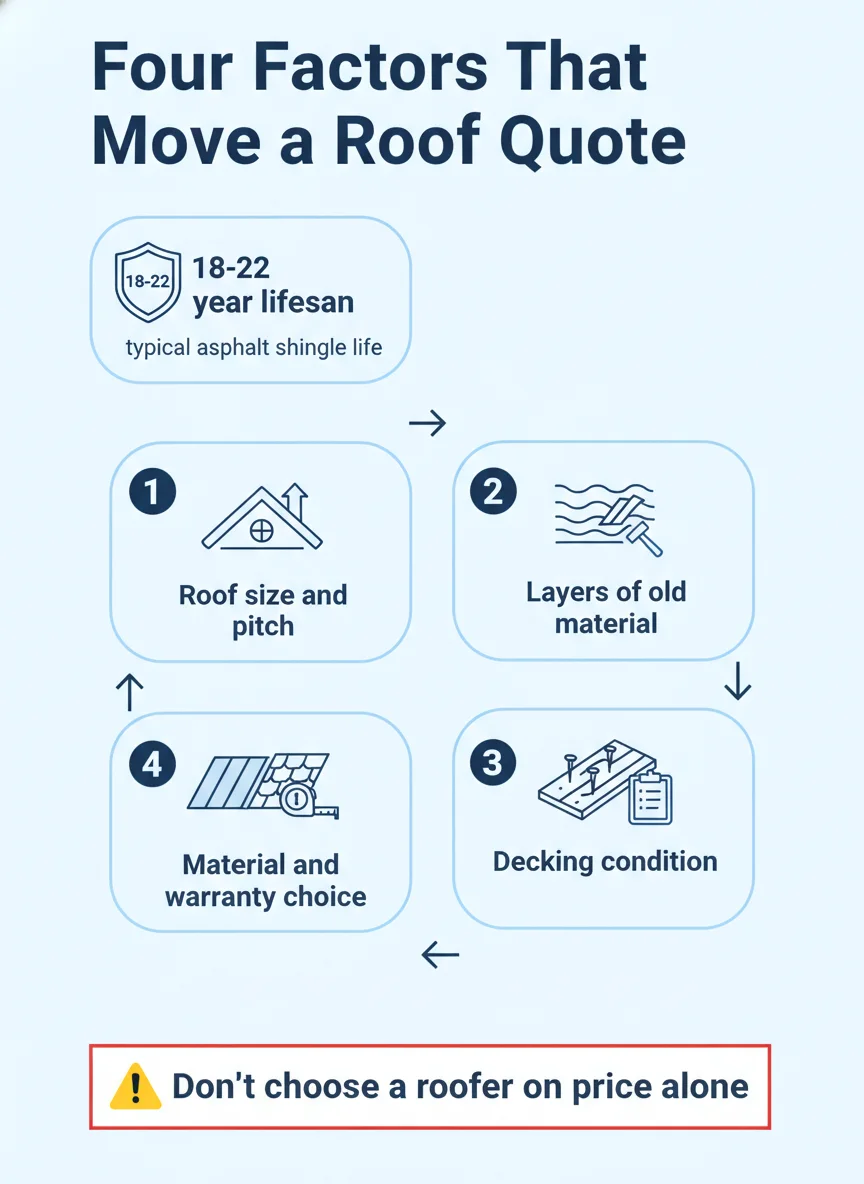
A handful of factors consistently separate a cheap bid from an expensive one, and most of them come down to how much material and labor the job actually requires once you look past the square footage.
Size, Pitch, and Roof Complexity
A simple roof with one or two slopes and no obstructions goes up quickly and uses less waste material than a roof full of valleys, dormers, chimneys, and skylights. Every penetration needs flashing, every valley needs extra underlayment, and a steep pitch slows the crew down because they're working with ropes and harnesses instead of walking the deck freely.
Square footage alone doesn't tell the whole story. Two 2,000-square-foot roofs can cost noticeably different amounts if one is a straightforward gable and the other is a cut-up hip roof with six different roof planes meeting at odd angles.
Tear-Off Scope and Decking Condition
Removing one layer of old shingles is a different job than removing two or three layers, and disposal costs climb with every extra layer hauled off the property. Once the old material is off, the condition of the decking underneath matters just as much. Soft spots, rot, or old nail holes from a previous install may need plywood replaced before new material goes down.
A quote that assumes perfect decking and doesn't account for the possibility of repairs can end up with change orders mid-job. Ask any roofer how they handle decking repairs they find after tear-off, and get that answer in writing before the crew starts.
| Factor | Lower Cost Scenario | Higher Cost Scenario |
|---|---|---|
| Roof pitch | Low slope, easy to walk | Steep slope, requires harnesses |
| Existing layers | Single layer tear-off | Two or more layers to remove |
| Decking condition | Solid plywood, no repairs needed | Soft spots requiring new sheathing |
| Material choice | Standard asphalt shingles | Metal, tile, or impact-resistant shingles |
What You're Actually Paying For
A full roof replacement quote usually bundles several distinct parts of the job into one number: tear-off and disposal of the old roof, repair of any damaged decking, new underlayment, the roofing material itself, flashing around chimneys and vents, ridge caps, and cleanup once the work is done. Each of those pieces has its own labor and material cost baked in.
Warranty coverage factors in too. A roofer offering a written workmanship warranty is standing behind their labor, not just passing along the manufacturer's material warranty, and that backing is part of what you're paying for even though it doesn't show up as a separate line item.
Step-by-Step: How to Read and Compare a Roof Replacement Quote
Comparing quotes gets a lot easier once you know what to look for on the page. Walk through each bid with these checks before making a decision.
- Confirm the scope: Make sure each quote specifies a full tear-off versus a roof-over, and how many layers are being removed.
- Check decking terms: Look for how the contractor prices decking repairs found after tear-off, ideally a per-sheet rate stated upfront.
- Compare materials line by line: Verify the shingle, metal, or tile type and warranty length are the same across quotes before comparing dollar amounts.
- Ask about flashing and ventilation: New flashing around chimneys and vents should be included, not treated as an upsell later.
- Review the warranty in writing: A workmanship warranty should be a written document, not a verbal promise from the salesperson.
- Ask about cleanup: Confirm the crew removes debris and runs a magnetic sweep for nails before leaving the property.
- Get license and insurance proof: A licensed, insured roofer should provide this without hesitation when asked.
What a Low-Ball Quote Usually Means
A quote that comes in well below the others on your list usually isn't a deal, it's a sign that something is missing from the scope. Common shortcuts include skipping new underlayment, reusing old flashing instead of replacing it, or quoting a thinner material than the other bids.
Signs the Scope Was Cut
Look for vague wording like 'standard materials' without a named product line, no mention of decking repair pricing, or a warranty that's noticeably shorter than competing quotes. If the quote doesn't mention disposal of old roofing material, ask directly where that debris is going and who's paying to haul it.
A reputable roofer can walk you through exactly why their number looks the way it does. If a contractor gets defensive or vague when you ask what's included, that's worth noting before you sign anything.
Signs the Quote Is Solid
A detailed quote itemizes tear-off, decking, underlayment, material, flashing, ridge work, and cleanup, and names the specific products being used. It should also spell out the workmanship warranty terms clearly instead of leaving that to a conversation after the contract is signed.
If you're still unsure which quote to trust, a roof inspection before you commit can confirm the actual condition of your roof and decking, which gives you a second opinion to weigh against the bids you've already collected.
What You Can Decide Yourself vs. What Needs a Pro's Input
Homeowners can absolutely narrow down material choices on their own. Deciding between asphalt shingles and metal roofing based on how long you plan to stay in the home, your budget, and the look you want is a reasonable DIY research step before any contractor shows up.
What you can't reliably judge yourself is the condition of the decking, the structural soundness of the roof, or whether flashing details around penetrations are built to hold up through a Colorado winter. Those calls need a trained eye and often aren't visible until the old layer comes off.
The smartest approach is doing your own homework on materials and budget range, then letting a licensed roofer handle the technical evaluation of your specific roof. That combination gets you an informed decision without guessing at things that require hands-on inspection.
Getting a Quote You Can Actually Compare
A roof replacement is one of the bigger investments you'll make in a home, and the price swings you'll see between contractors almost always trace back to differences in scope rather than one roofer simply being more expensive for the same work. Reading quotes line by line, asking about decking terms, and confirming warranty language puts you in a much stronger position to compare fairly.
If you want a straightforward look at what your roof actually needs before you start collecting bids, roof replacement from Precise Roofing starts with a clear walkthrough of your roof's condition so the quote you get back reflects the real scope of the job, not a guess.
Frequently asked questions
Why do roof replacement quotes vary so much between contractors?
Quotes vary because contractors scope the job differently, some include full decking replacement or disposal fees and some don't. A lower number often means something is left out, so it pays to ask what's actually included line by line.
Does roof pitch affect the cost of a replacement?
Yes, steeper roofs take longer to work on safely and require more fall protection, which adds labor time. A steep or complex roof with multiple valleys and dormers will generally cost more than a simple low-slope rectangle of the same square footage.
Is it cheaper to install a new roof over the old one?
It can look cheaper upfront, but most roofing codes and manufacturer warranties limit how many layers can stack, and a roof-over hides the condition of the decking underneath. A full tear-off costs more at the time but gives an honest look at what's under the surface.
What makes one roofing material more expensive than another?
Material cost is driven by durability, weight, and how it's manufactured, with metal and tile generally running higher than asphalt shingles because they last longer and require more specialized installation. The right choice depends on your home, your roof pitch, and how long you plan to stay in the house.
Should I get more than one quote before replacing my roof?
Yes, getting a few quotes helps you see the going rate for your specific roof and catches any outlier bids that are too high or suspiciously low. Compare the scope of work in each quote, not just the bottom-line number.