
Why roof lifespan isn't just a number on a brochure
Every roofing material comes with an expected lifespan range, but that number assumes average conditions and regular upkeep. In the Denver Metro area, conditions are rarely average. Intense sun at elevation, sudden hail, and wide swings between hot afternoons and cold nights all put more stress on a roof than the same material would see at sea level in a milder climate.
That means two roofs installed the same year, with the same shingle, can age very differently depending on how they've been treated and what they've been through. One homeowner who checks their roof once a year and clears debris promptly might get the full stretch of that material's expected life. Another who ignores small issues might be looking at replacement years earlier than the brochure number suggested.
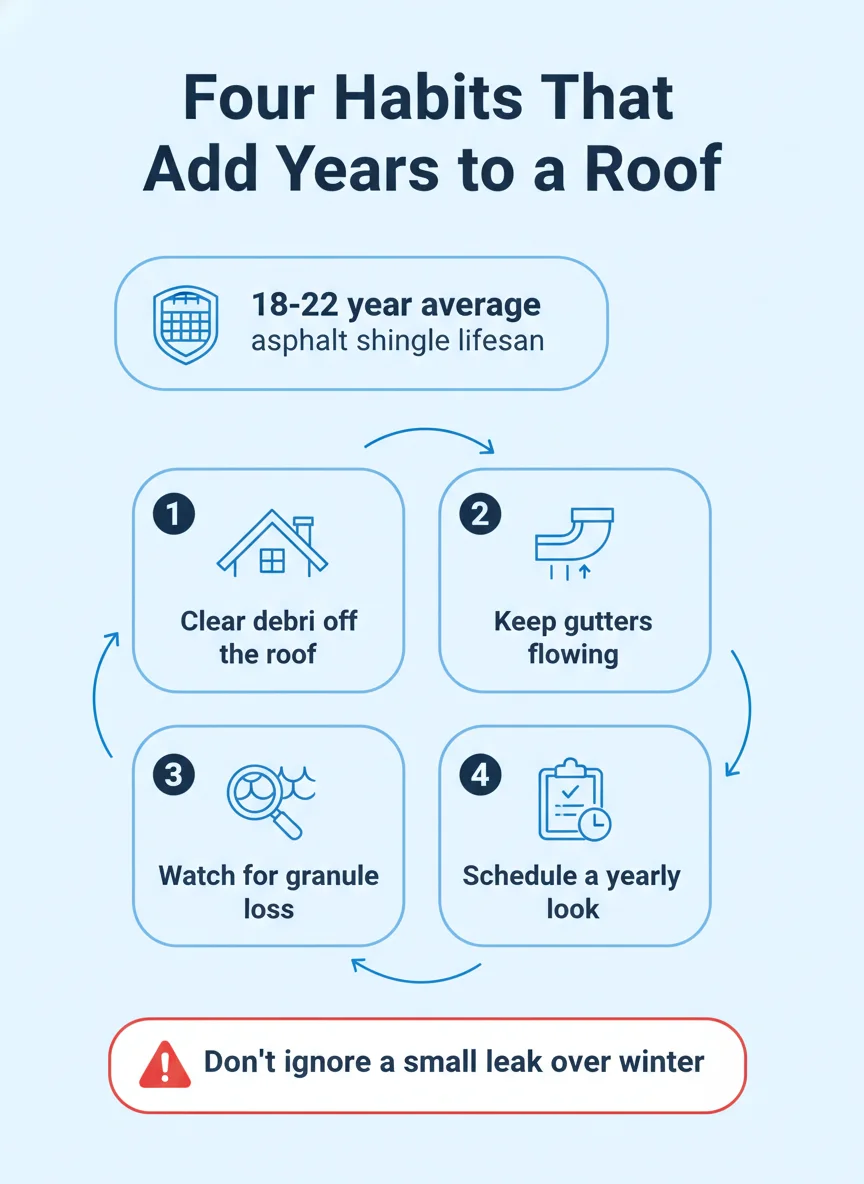
What actually wears a roof down over time
A handful of forces do most of the damage to a roof's surface and structure over the years, and understanding them helps explain why some roofs age faster than others even in the same neighborhood.
Sun and UV exposure
Colorado's high elevation means more direct UV exposure than most of the country gets, even on a clear winter day. Over years, UV breaks down the asphalt in shingles, drying them out and making them brittle. This shows up as granule loss, curling edges, and a roof that looks older than its actual age, especially on south and west-facing slopes that catch the most sun.
There's not much a homeowner can do to block UV exposure directly, but good attic ventilation helps by keeping the underside of the roof deck cooler, which reduces some of the heat stress that compounds UV damage from above. A roof with poor airflow underneath tends to run hotter and age faster than one with proper venting.
Hail, wind, and temperature swings
Hail bruises and cracks shingles, sometimes without creating a visible leak right away. Wind can lift shingle edges and loosen flashing around vents and chimneys. And the daily swing between hot afternoons and cold nights causes materials to expand and contract repeatedly, which loosens seals and fasteners over time even without a single dramatic storm event.
None of these forces act alone. A roof that's already a little worn from UV exposure is more vulnerable to hail damage than a newer one, and a roof with minor wind damage left unrepaired becomes an easier target for water intrusion during the next storm. Small issues compound if they're left alone.
| Factor | Shortens lifespan | Extends lifespan |
|---|---|---|
| Sun exposure | South/west-facing slopes with no shade | Good attic ventilation, reflective materials |
| Storm damage | Hail and wind damage left unaddressed | Prompt inspection and repair after storms |
| Maintenance | Debris buildup, clogged gutters | Regular clearing and yearly checks |
| Installation quality | Rushed or improper flashing work | Proper installation with attention to detail |
The parts of a roof that fail before the shingles do
Shingles get the attention, but flashing, underlayment, and ventilation components often fail first and take the shingles down with them. Flashing around chimneys, skylights, and vent pipes seals the gaps where water would otherwise get in, and it's usually thinner metal that corrodes or loosens before the shingle field shows real wear.
Underlayment, the water-resistant layer beneath the shingles, is the backup line of defense if the surface layer fails. A roof with quality underlayment can survive minor shingle damage without leaking, buying time until a proper repair can happen. Ventilation, as mentioned, affects how hot the attic runs and how much moisture builds up underneath, both of which shorten the life of everything above them.
Step-by-step: what to do each year to protect your roof's lifespan
A simple yearly routine catches most of the issues that shorten a roof's life before they turn into bigger repairs.
- Walk the perimeter: Look up from the ground each season and note anything that looks off: missing shingles, sagging lines, or debris piled against a slope.
- Clear the gutters: Clogged gutters cause water to back up under the roof edge, which is one of the most common causes of edge rot and interior leaks.
- Check the attic: Look for daylight through the roof deck, damp insulation, or signs of poor airflow, all of which point to ventilation or sealing issues.
- Trim nearby branches: Overhanging limbs drop debris and scrape the surface in wind, both of which wear down shingles faster than normal weather exposure.
- Schedule a look after storms: Hail and high wind events are worth a check even if nothing looks obviously wrong from the ground.
- Get a yearly inspection: A trained eye catches granule loss, loose flashing, and early soft spots long before they turn into an active leak.
What early wear actually looks like up close
Knowing the general causes is one thing, but recognizing the signs on your own roof is what actually prompts action before a small problem becomes a big one.
Signs a roof is aging normally
Some granule loss in the gutters, slight color fading, and a few loose or lifted shingle edges are normal signs of a roof approaching the back half of its expected life. These don't necessarily mean trouble is imminent, but they're worth tracking year over year to see how fast the wear is progressing.
A roof showing these signs at 15 years is on a normal track. The same signs showing up at 8 years suggest something, whether it's sun exposure, poor ventilation, or installation quality, is accelerating the wear faster than it should.
Signs a roof needs attention now
Bald patches where granules have worn away completely, soft spots in the roof deck, daylight visible through the attic, and any active leak are signs that waiting isn't the right move. These point to a roof that's past the point where routine maintenance alone will fix the problem.
A roof repair visit at this stage can sometimes buy more time if the damage is isolated, but widespread wear usually points toward planning for a roof replacement on your own timeline rather than waiting for a failure to force the decision.
What a homeowner can check versus what needs a licensed roofer
Ground-level and attic checks are reasonable for most homeowners to do themselves. Walking the yard to look at the roofline, checking the attic for daylight or dampness, and clearing visible debris from the ground or a stable ladder don't require special equipment or training.
Getting on the roof itself is a different matter. Shingles can be deceptively slippery, the slope hides how steep it really is from the ground, and walking on a roof that's already stressed can cause damage a homeowner didn't intend to cause. Flashing repair, underlayment work, and anything involving ventilation components also call for someone who knows how the pieces fit together.
A licensed roofer carries the right safety equipment, knows what to look for that isn't obvious from a photo, and can tell the difference between cosmetic wear and a structural concern. That judgment call is worth more than the cost of a roof inspection in most cases, especially on a roof that's getting up toward the back half of its expected life.
Getting the most years out of the roof you have
A roof's actual lifespan comes down to a mix of material, climate, and how consistently small issues get caught and fixed. Homeowners across Denver Metro towns like Littleton, Arvada, and Aurora all deal with the same elevation and weather pressures, so the maintenance habits that extend a roof's life here look similar no matter which neighborhood it's in. For more on how specific materials compare side by side, see how long each roof type lasts in Colorado.
Staying ahead of small problems, rather than waiting for a leak to force the issue, is the single biggest lever a homeowner has over how long their roof actually lasts. Precise Roofing has been inspecting, repairing, and replacing roofs across the region for over 20 years and can help put a real number on where your roof stands today.
Frequently asked questions
How long does a roof actually last in Colorado?
It depends heavily on the material and how well it's maintained, but asphalt shingles in this climate typically run somewhere in the 18-22 year range across the industry. Elevation, sun exposure, and how quickly small problems get fixed all push that number up or down.
Does altitude make a roof wear out faster?
Higher elevation generally means more intense UV exposure, and UV is one of the biggest factors in shingle breakdown over time. Homes at higher elevation around Denver Metro often see faster granule loss than homes at lower elevation, even with the same shingle.
Can I extend my roof's life without replacing it?
Yes, in most cases. Keeping debris off the roof, clearing gutters so water doesn't back up under the edge, and fixing minor repairs quickly all add real years to a roof's working life.
What's the first sign a roof is nearing the end of its life?
Granule loss in the gutters, shingles that curl or look flat and brittle, and small leaks that start showing up in more than one spot are the usual early signs. A [roof inspection](/services/roof-inspections) can tell you how much life is actually left versus how old the roof is on paper.
Does one storm shorten a roof's overall lifespan even if it doesn't cause a visible leak?
It can. Hail and high wind stress shingles and flashing in ways that aren't always visible from the ground, and that stress adds up even if water isn't coming through yet. That's why a look after a bad storm matters, not just after a leak starts.