
What Actually Goes Into a Roof Replacement Price in Colorado
Ask five homeowners in the Denver Metro what their roof replacement cost and you'll get five different answers, and that's normal. Roof pricing isn't a flat rate because every roof is a different shape, a different pitch, and a different material, sitting on top of a different house with its own access challenges. What one quote covers might not be what another one covers either, which is part of why two bids on the same house can land far apart.
The good news is the variables are knowable. Once you understand what moves a price up or down, you can read a quote the way a contractor reads it, and you can ask sharper questions when you're comparing bids. That's the goal of this guide: not a number, but a map of the factors that create the number.
Why Roof Replacement Pricing Varies So Much
At its core, a replacement price reflects three things: how much material the job needs, how long the crew will be on the roof, and how much risk and complexity the roof itself adds. A simple, low-pitch roof on a ranch-style home takes a fraction of the labor that a steep, multi-gable roof on a two-story home takes, even if the square footage is similar. Add in things like skylights, chimneys, and multiple roof planes, and the labor side of the estimate climbs.
Material Choice
Asphalt shingles, metal panels, tile, and flat membrane systems like TPO or EPDM all have different material costs and different install times. Metal and tile roofs generally cost more upfront than asphalt but tend to last longer, which is a tradeoff worth thinking through rather than a simple upgrade decision. If you're weighing material options, Asphalt Shingles vs Metal Roofing for a Colorado Home walks through how each performs here.
Flat and low-slope commercial systems price differently again, since they're measured and installed in rolled or adhered sections rather than individual shingles. A business considering a membrane roof should expect a different conversation with their contractor than a homeowner comparing shingle brands, simply because the materials and crews involved aren't the same.
Roof Size, Pitch, and Access
Square footage sets the material order, but pitch sets the labor hours. A steep roof requires more safety gear, slower movement, and often a smaller crew working at a time, which stretches the timeline. Access matters too: a roof that backs up to a tight side yard or sits over a finished basement with no easy staging area takes longer to load material onto and haul debris off of than a roof with open driveway access.
Multiple stories add the same kind of friction. A two-story home needs taller ladders, more careful staging, and more time moving material, all of which show up in the labor line of a quote even before a single shingle is installed.
| Factor | Tends to lower cost | Tends to raise cost |
|---|---|---|
| Pitch | Low slope, easy to walk | Steep, multiple planes |
| Material | Asphalt shingle | Metal, tile, or premium membrane |
| Layers on roof now | Single existing layer | Multiple layers needing removal |
| Access | Open driveway, single story | Tight lot, two-plus stories |
What's Actually Included in a Full Replacement
A full Roof Replacement is a complete tear-off, not a layer added on top of what's there. The old material comes off down to the decking, the decking gets inspected and any damaged sections are addressed, then new underlayment, flashing, and the finish material go on in that order. Flashing around chimneys, vents, and skylights gets replaced as part of the job rather than reused, since old flashing is a common source of future leaks.
Cleanup is part of the scope too. A thorough crew protects landscaping, runs a magnetic sweep for nails, and hauls away the old material rather than leaving it for the homeowner to deal with. If a quote doesn't spell out tear-off, decking inspection, flashing replacement, and cleanup as separate line items, it's worth asking what's actually included before comparing it to another bid.
Step-by-Step: What Happens Once You Say Yes
The replacement itself moves through a consistent sequence, even though the timeline shifts with weather, material, and roof size. Here's the general order a crew follows once a job is scheduled.
- Material delivery: Shingles, metal, or membrane and all the underlayment and flashing arrive on site, usually staged in the driveway or on the roof itself ahead of the work day.
- Tear-off: The old roofing material comes off down to the decking, with debris loaded directly into a trailer or dumpster as it's removed.
- Decking inspection: Exposed decking is checked for soft spots, rot, or old damage, and any sections that won't hold a nail get replaced before anything new goes down.
- Underlayment and flashing: A water-resistant barrier goes down first, followed by new flashing around every penetration: chimneys, vents, skylights, and valleys.
- Finish material install: Shingles, metal panels, tile, or membrane go on according to the manufacturer's install pattern, starting at the eaves and working up.
- Final cleanup: The crew sweeps for nails, clears debris, and does a final walk of the property before calling the job done.
What Decking Damage and Storm History Tell You About Price
Hidden Decking Damage
Decking damage is the one variable a quote almost never predicts accurately, because it's hidden under the existing material until tear-off begins. A roof that's had a slow leak for years, even a small one, can hide rotted plywood that only becomes visible once the old shingles are stripped off. A contractor worth hiring will flag this as a possibility up front and explain how it's handled if it's found, rather than pretending it won't happen.
This is also where a pre-replacement Roof Inspection earns its keep. Catching soft decking, past repairs, or ventilation issues before the crew is on site gives you a more accurate expectation of what the final invoice will include, instead of a surprise mid-project.
Storm and Insurance Factors
If your roof is being replaced because of Storm & Hail Damage rather than normal wear, the cost conversation runs through your insurance policy as much as it does through the contractor's estimate. A roof damaged by hail or wind often gets documented by both your roofer and an adjuster, and the claim process itself can affect which materials are approved and what the homeowner's share of the cost looks like.
That's a different path than replacing a roof simply because it's reached the end of its service life, where the full cost sits with the homeowner and the material and labor choices are entirely theirs to make.
What You Can Evaluate Yourself vs What Needs a Licensed Roofer
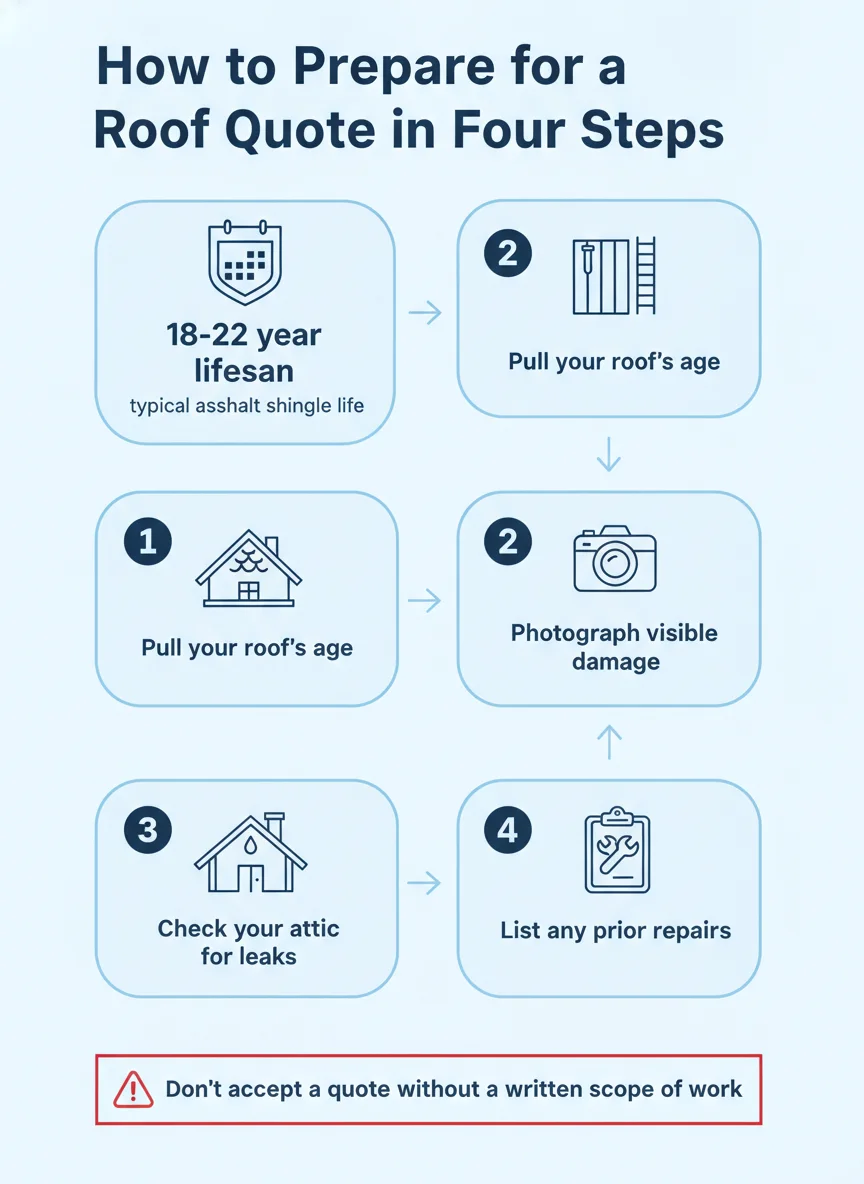
A homeowner can do a lot of the groundwork before a contractor ever shows up. Walking the attic for daylight or water stains, photographing visible shingle damage from the ground, and pulling together any paperwork from past repairs all help a contractor give you a more accurate read during the first visit. None of that requires getting on the roof, which is exactly the point: most of the useful homeowner work happens from the ground or the attic.
What shouldn't be a DIY step is the inspection itself, or any decision about decking, flashing, or ventilation. Those calls require someone who's walked hundreds of roofs and knows what a failing section looks like versus one with years of life left. A licensed roofer also carries the insurance and safety training that climbing on a roof actually requires, which isn't something to improvise.
The same split applies to getting quotes. You can and should request multiple estimates and compare what's included, but the actual decision between materials, like whether metal makes more sense than asphalt for your pitch and budget, is worth talking through with someone who installs both regularly rather than guessing from a product label.
Getting a Quote You Can Actually Compare
The fastest way to get a usable number is to start with an inspection rather than a phone estimate, since so much of the cost depends on things that only show up once someone's on the roof and in the attic. A written scope that spells out material, tear-off, decking allowances, and cleanup lets you compare bids apples to apples instead of guessing at what each number actually covers.
Precise Roofing has served homeowners and businesses across the Denver Metro, including Denver and the surrounding region, with the kind of detailed, written quotes that make this comparison possible.
Frequently asked questions
What makes roof replacement cost more in one house versus another?
The biggest swings come from size, pitch, and material. A steep roof takes longer to work safely and a larger footprint needs more material and labor, while the choice between asphalt, metal, tile, or a flat system changes both the material cost and the install time.
Does the number of layers on my existing roof affect the price?
Yes. If the old roof already has more than one layer of material, it generally has to come off before a new layer goes on, which adds tear-off time and disposal cost compared to a roof with a single layer.
Is a steep roof more expensive to replace than a flat one?
Usually, yes, because a steep pitch slows down every part of the job and requires more safety equipment, while flat and low-slope systems like TPO or EPDM are walked more easily but use different materials that have their own cost range.
Will insurance pay for my roof replacement?
It depends on your policy and the cause of the damage. Storm and hail damage are often covered after an adjuster inspection, which is different from a roof that simply wore out, so it's worth having the roof documented either way.
Does roof decking damage change the cost?
It can. If the crew finds soft or rotted decking once the old material is off, replacing that wood is an added cost that a quote usually can't predict until the tear-off is underway, which is why a pre-replacement inspection matters.