
Why Colorado Homeowners Should Actually Read Their Roof Warranty
Colorado roofs take a beating from UV exposure, hail, and big temperature swings between day and night, which means a roof warranty isn't a formality here, it's a document you may actually need to use. Front Range and mountain-adjacent homes see enough weather cycles that a material defect or a bad install detail tends to show up sooner than it would in a milder climate.
The trouble is that most homeowners never read the warranty paperwork until something goes wrong, and by then it's too late to ask the right questions. A roof can carry two or three separate warranty documents at once, each issued by a different party and covering a different failure. Knowing which one applies to your problem, before you have a problem, saves a lot of frustration during a roof replacement or repair down the line.
What's the Difference Between a Material, Workmanship, and Extended Warranty?
A material warranty is issued by the manufacturer and covers defects in the product itself. A workmanship warranty is issued by the installing contractor and covers mistakes made during the install. An extended or enhanced warranty sits on top of both, usually requiring a certified installer, and bundles longer labor coverage with the manufacturer's material terms.
Material Warranties
Material warranties cover things like a shingle that granule-loses prematurely, cracks before its expected lifespan, or fails to seal properly out of the bundle. These are typically published as lifetime limited warranties on asphalt shingles, though the full-value coverage period (the years you get a full replacement cost rather than a prorated amount) is usually much shorter than the lifetime term itself.
Metal, tile, and flat roofing systems each carry their own material warranty structure, and the terms differ by product line rather than by roofer. This is the document you'd pull out if you believe the shingles or panels themselves are failing rather than the install underneath them.
Workmanship Warranties
A workmanship warranty is the contractor's promise on their own labor. If flashing was installed wrong, nails were set at the wrong depth, or ventilation wasn't done to spec, this is the document that covers a callback to fix it. Workmanship warranty terms vary widely from one roofing company to the next, because there's no manufacturer standard behind them.
This is also the warranty most likely to get a verbal promise instead of paperwork, which is why a written workmanship warranty matters more than most homeowners realize when comparing bids. A contractor who puts it in writing is telling you they expect to stand behind the job years from now, not just on closing day.
| Warranty Type | Who Issues It | What It Covers |
|---|---|---|
| Material | Manufacturer | Product defects in the shingles, panels, or membrane itself |
| Workmanship | Installing contractor | Installation errors like flashing, fastening, or ventilation mistakes |
| Extended / Enhanced | Manufacturer, through a certified installer | Longer material and labor terms bundled together |
How Extended Coverage Changes the Terms
Extended or enhanced warranties are the manufacturer's way of rewarding installers who've completed their certification programs. Because the manufacturer has already vetted the installer's process, they're often willing to cover more, sometimes adding labor coverage for a longer stretch of years, or covering both material and workmanship under a single document instead of two separate ones.
The tradeoff is that these enhanced tiers usually require the whole system (not just the shingle) to be installed with matching accessory products from the same manufacturer, and registration has to happen within a set window after the job finishes. Skipping registration, or mixing in a different brand's ventilation component, can knock you back down to the standard material warranty even if the shingle itself is fine.
Step-by-Step: How to Read Your Roof Warranty Document
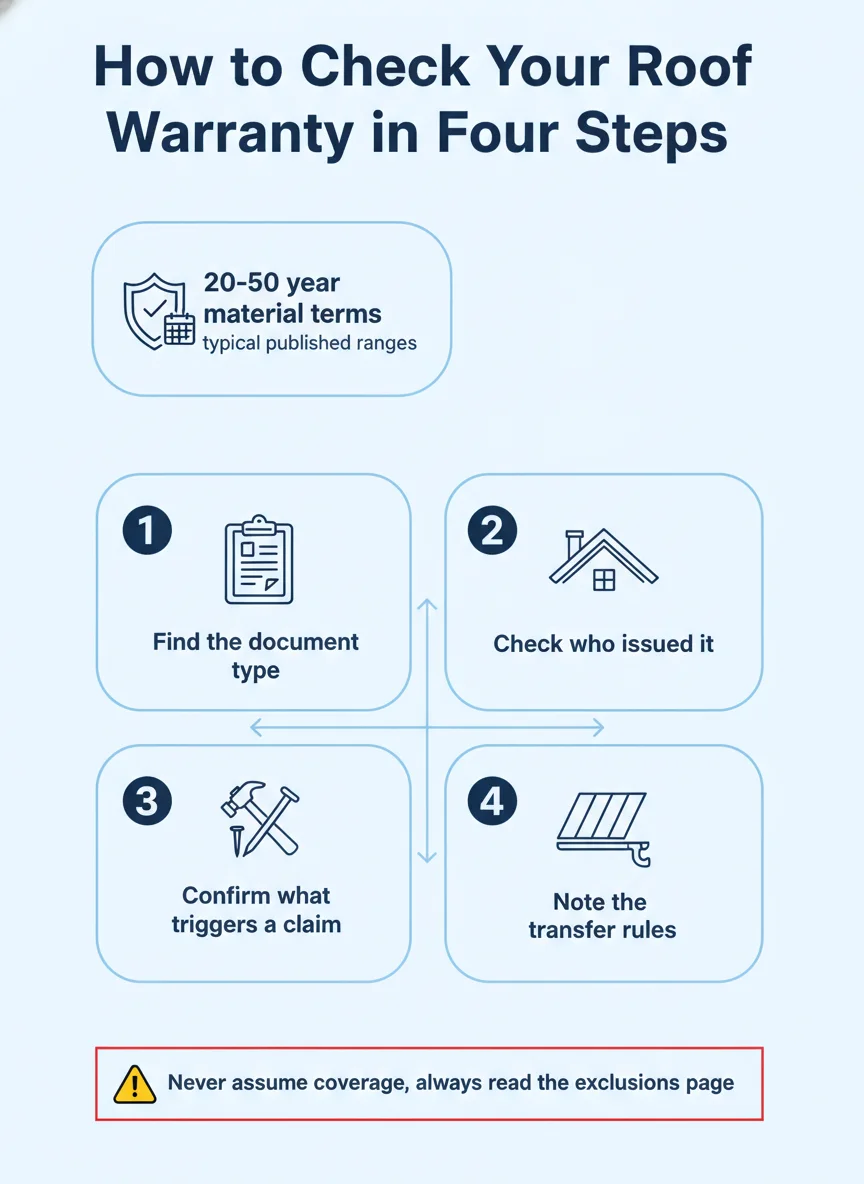
Warranty paperwork reads like a legal document because it is one, but you don't need a law degree to pull the key facts out of it. Work through it in this order the next time you're handed a warranty packet after an inspection or install.
- Identify the issuer: Check the letterhead to see whether the document is from the manufacturer or the contractor, since that determines who you call first.
- Find the term length: Look for the published years of coverage and note whether it's full-value or prorated after a certain point.
- Read the exclusions section: This list tells you exactly what can void coverage, often including unapproved repairs or added roof penetrations.
- Check the transfer clause: See if coverage can pass to a new owner and whether there's a deadline or a fee involved.
- Confirm registration status: Some enhanced tiers require online registration within weeks of completion, so verify it was filed.
- Note the maintenance requirements: Many warranties expect periodic upkeep like debris clearing, and skipping it can affect a future claim.
- Keep a copy off-site: Store a digital copy somewhere other than the house itself, in case you need it after a storm damages paperwork too.
What Should You Do If a Warranty Claim Gets Denied?
Start by confirming which warranty actually applies to the failure you're seeing, since a denied material claim might still be valid as a workmanship issue or vice versa. Manufacturers and contractors look at different things when evaluating a claim, so a denial from one doesn't always mean the other party is off the hook too.
Reading the Denial Letter
A denial letter should state the specific exclusion clause being applied. Compare that clause to what actually happened on your roof, because denials sometimes cite a general exclusion that doesn't precisely match the failure mode you're dealing with.
If the denial references unapproved repairs or maintenance records, pull together any receipts or photos you have showing upkeep was done, even informally. A documented history of care can matter in a follow-up appeal.
Escalating a Disputed Claim
Most manufacturers have a formal appeal process separate from the original claim review, and it's worth using if you believe the denial was based on a misread of the damage. A roofing contractor familiar with that manufacturer's process can often help frame the appeal in terms the reviewer is used to seeing.
If the dispute involves storm damage layered on top of a material or installation question, it may also intersect with your homeowner's insurance claim. That's a separate process worth understanding on its own, covered in more detail in the roof insurance claim timeline guide.
What Can You Handle Yourself vs. What Needs a Pro?
Reading and organizing your warranty paperwork is something any homeowner can do on their own, and it's worth doing the week the job finishes rather than years later when a problem shows up. Keep digital and paper copies, highlight the term lengths, and note the registration deadline on a calendar.
Diagnosing whether a failure is a material defect or an installation error is where a licensed roofer earns their keep. The two can look similar from the ground, a curling shingle might be a bad batch or it might be a ventilation problem underneath it, and getting that wrong means filing a claim with the wrong party and wasting time.
Filing the actual claim paperwork is usually a shared job. Manufacturers often want photos and sometimes a sample of the failed material, which a contractor is better equipped to document correctly than a homeowner working from the ground with a phone camera.
Keeping Your Roof Warranty Worth the Paper It's Printed On
A warranty is only useful if it's understood before you need it, and that means reading the document, confirming who issued it, and knowing what maintenance or registration steps keep it active. Homes across Denver and the surrounding towns see enough weather variation that this paperwork tends to matter sooner here than in calmer climates.
Precise Roofing puts workmanship coverage in writing on every job, so homeowners aren't left relying on a handshake when a question about the install comes up down the road.
Frequently asked questions
What's the difference between a manufacturer warranty and a workmanship warranty?
A manufacturer warranty covers defects in the materials themselves, like a shingle that cracks or curls before its published lifespan is up. A workmanship warranty covers the installation, meaning the contractor stands behind their own labor if something was installed wrong. You can have a perfect manufacturer warranty and a bad install, or the reverse, which is why most roofs come with both.
Can I transfer my roof warranty if I sell my house?
Many manufacturer and workmanship warranties allow one transfer to a new homeowner, usually within a limited window after the sale and sometimes for a small administrative fee. The rules vary by document, so check the transfer clause before you list the house. A buyer who sees a transferable warranty often views it as a point in the home's favor.
What voids a roof warranty?
The most common issues are unapproved repairs, adding equipment like satellite dishes or solar mounts without proper flashing, and skipping required maintenance the warranty document calls for. Walking on the roof improperly or power-washing certain materials can also void coverage. Reading the exclusions section before you do any work on the roof is the simplest way to avoid this.
How long does a typical roof warranty last?
Material warranties on asphalt shingles are commonly published in ranges of 20 to 50 years, often as lifetime limited coverage, while workmanship warranties are set by the contractor and vary much more. Extended or enhanced warranties, which require a certified installer, often add years of labor coverage on top of the standard terms. The specific number always depends on the product line and the installer's certification level.
Do I need to register my roof warranty?
Some manufacturer warranties activate automatically at install, while enhanced or extended tiers typically require online registration within a set window after the job is complete. Missing that registration window can drop you from an enhanced tier down to the standard one. Ask your installer whether registration is required and who is responsible for filing it.