
Why Knowing Your Roof's Age Matters in the Denver Metro
If you've ever been asked 'how old is your roof?' by an insurance agent, a buyer's inspector, or a roofer standing in your driveway, and you genuinely didn't know, you're not alone. Most homeowners can tell you the age of their water heater or furnace before they can tell you the age of the roof over their head, mostly because nobody hands you a maintenance sticker for it.
Colorado's sun, hail, and temperature swings put real wear on roofing materials, and that wear accelerates as a roof passes the middle of its expected lifespan. Knowing the actual age lets you plan for a roof replacement on your schedule instead of being forced into one after a leak, and it also matters at renewal time since many insurers price policies differently once a roof crosses a certain age threshold.
Where a Roof's Age Actually Gets Written Down
The good news is that a roof replacement is rarely an invisible event. It usually generates paper somewhere, whether that's a government record, a closing document, or an invoice sitting in a drawer. The trick is knowing which of those sources to check first.
Permit Records at the Building Department
Most cities and counties require a permit for a full roof tear-off and replacement, which means the local building department likely has a record tied to your address even if you weren't the one who pulled it. You can usually request this by calling or visiting the permits office and giving them your street address.
The record will typically show the date the permit was issued and closed, which gives you a reliable installation window. This is often the single most trustworthy source available because it's a government record rather than something that depends on someone's memory or a misplaced receipt.
Closing Papers, Seller Disclosures, and Old Invoices
If you bought your home from a previous owner, dig out your closing packet. Seller disclosure forms frequently ask the seller to state when major systems, including the roof, were last replaced, and that answer gets carried into your file even if you never looked at it closely at the time.
If disclosures don't mention it, try the previous owner's paperwork trail. A roofing invoice, a manufacturer warranty card, or even an old insurance policy that lists the roof's install date can all confirm what the permit record shows, or fill the gap if no permit was ever pulled.
| Source | What It Tells You | How to Access It |
|---|---|---|
| Building permit record | Date of a full tear-off and replacement | Call or visit the local building department |
| Seller's disclosure form | Seller's stated roof age at time of sale | Check your closing packet from the home purchase |
| Previous owner's invoice | Exact install date and sometimes the material used | Ask the prior owner or check files left behind |
| Insurance policy or claims file | Roof age on file with your insurer | Call your agent and ask what date they have recorded |
What the Roof Itself Can Tell You
When paperwork is missing entirely, the roof's surface still leaves clues. Granule loss on asphalt shingles, visible curling at the edges, and flashing that's gone chalky or brittle all point toward a roof further along in its lifespan rather than a newer one. None of these signs give you an exact year, but they help narrow the range.
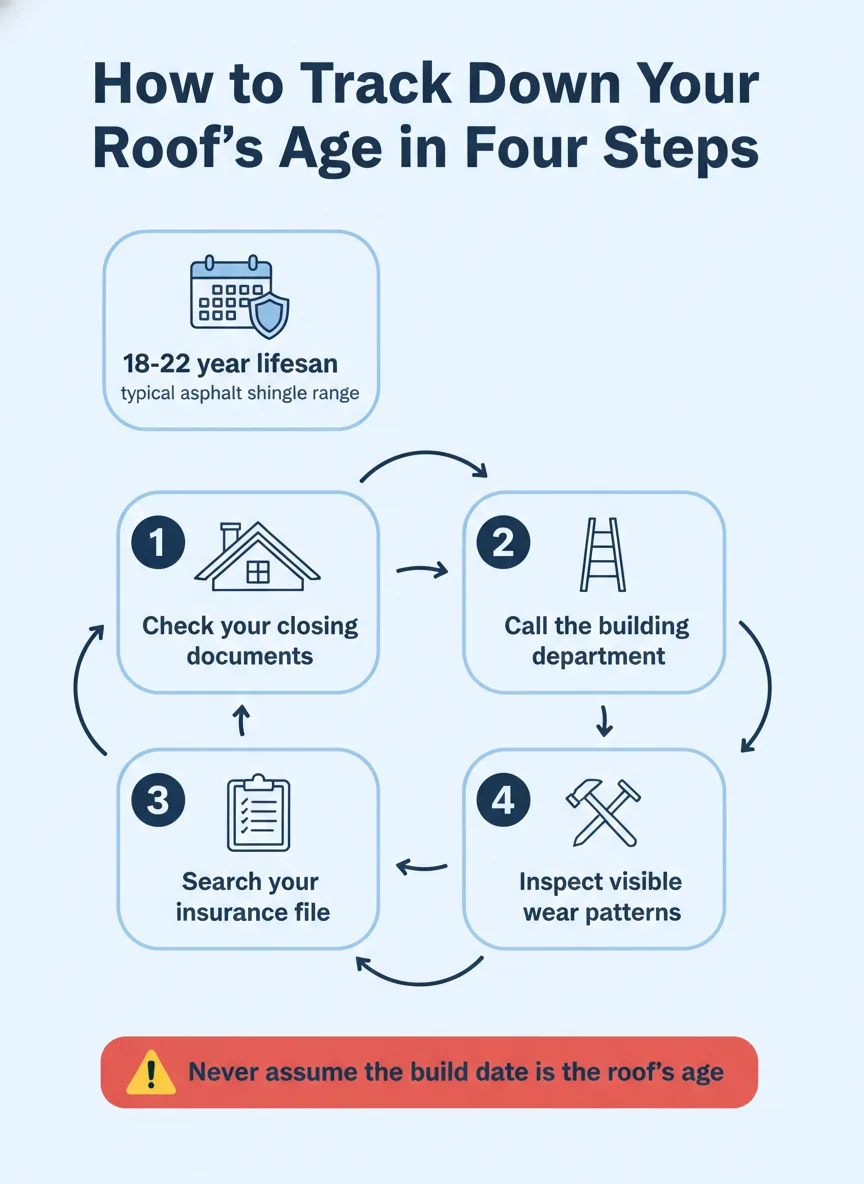
Color is another clue worth noting. Shingles fade with UV exposure over the years, so a roof with uneven coloring between sun-exposed and shaded slopes has usually been up there a while. A trained eye can usually tell the difference between a roof in its first decade and one pushing past the 18 to 22 year range typical of asphalt shingles across the industry.
Step-by-step: How to Track Down Your Roof's Age
If you're starting from zero knowledge, work through these sources in order. Most homeowners find an answer somewhere in the first three or four steps.
- Check closing documents: Pull your seller's disclosure and closing packet first, since this is the fastest place to find a stated roof age with no phone calls required.
- Call the building department: Request a permit history by address. This is often the most reliable record since it's tied to actual inspected work.
- Ask your insurance agent: Your current or past insurer may have an installation date on file from when the policy was written or renewed.
- Search for old invoices: Check files left by a previous owner, a home inspection report, or any manufacturer warranty paperwork that may list the install date.
- Look for visible wear: If no paperwork turns up, granule loss, curling shingles, and faded or brittle flashing all point toward an older roof.
- Get a professional opinion: A roof inspection can give you an educated estimate of age and remaining lifespan based on material condition.
What Your Findings Mean for Your Home
If the Roof Is Under 15 Years Old
A roof in this range is generally still well within its expected service life for most shingle types used across the Denver Metro. That doesn't mean it's maintenance-free, since hail and wind events can still cause damage regardless of age, but you're less likely to be looking at a full replacement unless storm damage is involved.
This is a good window to focus on routine upkeep, like keeping gutters clear and watching for flashing issues around chimneys and vents, rather than budgeting for a tear-off. Reviewing how different roofing materials hold up over time can also help you set realistic expectations for how many years you have left.
If the Roof Is Pushing 20 Years or More
A roof in this range is nearing or past the typical lifespan for asphalt shingles, which means small problems are more likely to turn into bigger ones. Leaks that would have been a simple patch on a newer roof can signal more widespread wear underneath once a roof reaches this age.
This is the point where it makes sense to start planning for replacement rather than waiting for a failure. An inspection can tell you whether you have a few more years of life left or whether it's time to start getting quotes, especially if you're also noticing cosmetic signs of aging on the surface.
Can You Figure This Out Yourself, or Call a Pro?
Most of the research described here is something you can absolutely do on your own. Pulling closing documents, calling the building department, and reaching out to your insurance agent don't require any roofing expertise, just a bit of time on the phone or digging through files you already have.
Where a professional becomes useful is in confirming condition once you have a rough age in hand, or when paperwork turns up nothing at all. Reading granule loss, flashing wear, and deck condition accurately takes a trained eye, and a roofer can usually tell you with more confidence than a homeowner standing on the ground looking up.
There's no safety reason to avoid doing the paperwork research yourself, but getting on the roof itself is a different story. Leave the physical inspection to someone with the right equipment and experience, especially on steeper pitches or multi-story homes.
Know Your Roof, Plan Ahead
Tracking down your roof's real age usually takes less effort than people expect, and the payoff is worth it. Whether you find a permit record, a disclosure form, or just enough visible wear to make an educated guess, you walk away with a clearer picture of how much life is left and what to budget for.
Once you know where your roof stands, you can plan maintenance or replacement on your own timeline instead of reacting to a leak, and that peace of mind alone is worth the phone calls. Precise Roofing can help confirm your roof's condition and age with a straightforward inspection whenever you're ready for a second opinion.
Frequently asked questions
Does the year my house was built tell me how old my roof is?
No, not unless the roof has never been replaced. Most homes get at least one full roof replacement over the decades, so the build date on your county property record tells you how old the house is, not how old the roofing material is.
Where is a roof replacement usually recorded?
It's usually recorded as a permit with your local building department, since most jurisdictions require a permit for a full tear-off and replacement. You can typically request that record by address even if you weren't the owner when the work was done.
What if I can't find any permit or paperwork at all?
You can get a reasonable estimate from a visual inspection instead. A roofer can look at granule loss, flashing condition, and shingle curl and give you an educated range for how many years the roof has left.
Does my homeowners insurance company keep track of my roof's age?
Many insurers ask for the roof's installation date when you buy or renew a policy, and that figure may be sitting in your policy file or a past inspection report. It's worth calling your agent and asking what age they have on record.
Why does my roof's age matter if it isn't leaking?
Insurance pricing, resale value, and maintenance planning all hinge on roof age even when everything looks fine on the surface. Knowing where you stand in the roof's lifespan helps you budget before a small issue turns into an emergency.