
Can You Roof Over Existing Shingles in the Denver Metro?
Roofing over existing shingles means installing a new layer of shingles directly on top of the old ones instead of tearing the old roof off first. It's a real option in parts of the Denver Metro and surrounding towns, but it only works under specific conditions, and it isn't right for every roof or every homeowner.
The appeal is obvious: skipping the tear-off cuts labor time and disposal costs, and the job can often be done in less time than a full replacement. But a roof-over doesn't fix anything underneath the old shingles, it just builds on top of whatever condition that layer is already in, good or bad.
Why Some Homeowners Consider Roofing Over Shingles
The decision usually comes down to budget and timeline. A roof nearing the end of its life but still watertight can sometimes get a second wind from an overlay, buying a homeowner a few more years without the expense of a full tear-off.
The Appeal of a Roof-Over
A roof-over skips demolition, which means less labor, less debris hauled off the property, and often a faster install day. For a roof that's structurally sound with only one existing layer, it can be a reasonable way to refresh the look and add a few years of protection.
It also disturbs the household less. There's no tear-off noise or exposed deck sitting under tarps overnight, which some homeowners find appealing if they're managing the project around a busy schedule or an older home with other work underway.
What a Roof-Over Hides
The tradeoff is that an overlay can't fix or even reveal what's happening under the old shingles. Soft decking, rotted plywood, damaged flashing around chimneys and vents, all of it gets covered up rather than addressed, and the new layer sits less flat as a result.
That uneven surface also affects how the new shingles seal and shed water over time. A shingle manufacturer designs its product to perform on a flat, bare deck, so building on top of an existing layer is already working against the system's intended performance.
| Factor | Roof-Over | Tear-Off and Replace |
|---|---|---|
| Deck inspection | Not possible, stays hidden | Fully exposed and checked |
| Install surface | Uneven, sits on old layer | Flat, bare deck |
| Typical lifespan | Shorter than a fresh install | Full expected lifespan of the material |
| Flashing and vents | Reused as-is | Replaced or upgraded |
What's Underneath Matters: Deck and Flashing
The roof deck is the plywood or OSB layer that everything else attaches to, and it's the one component a roof-over never lets anyone see. If that deck has soft spots from years of slow moisture intrusion, a new layer of shingles on top won't change that, it will just sit over a weak foundation.
Flashing around chimneys, skylights, and roof-to-wall transitions is just as important. These are the pieces most likely to leak first, and reusing old flashing under a new layer means any existing wear or gaps carry forward into the new install untouched.
Step-by-Step: How a Roof-Over Installation Works
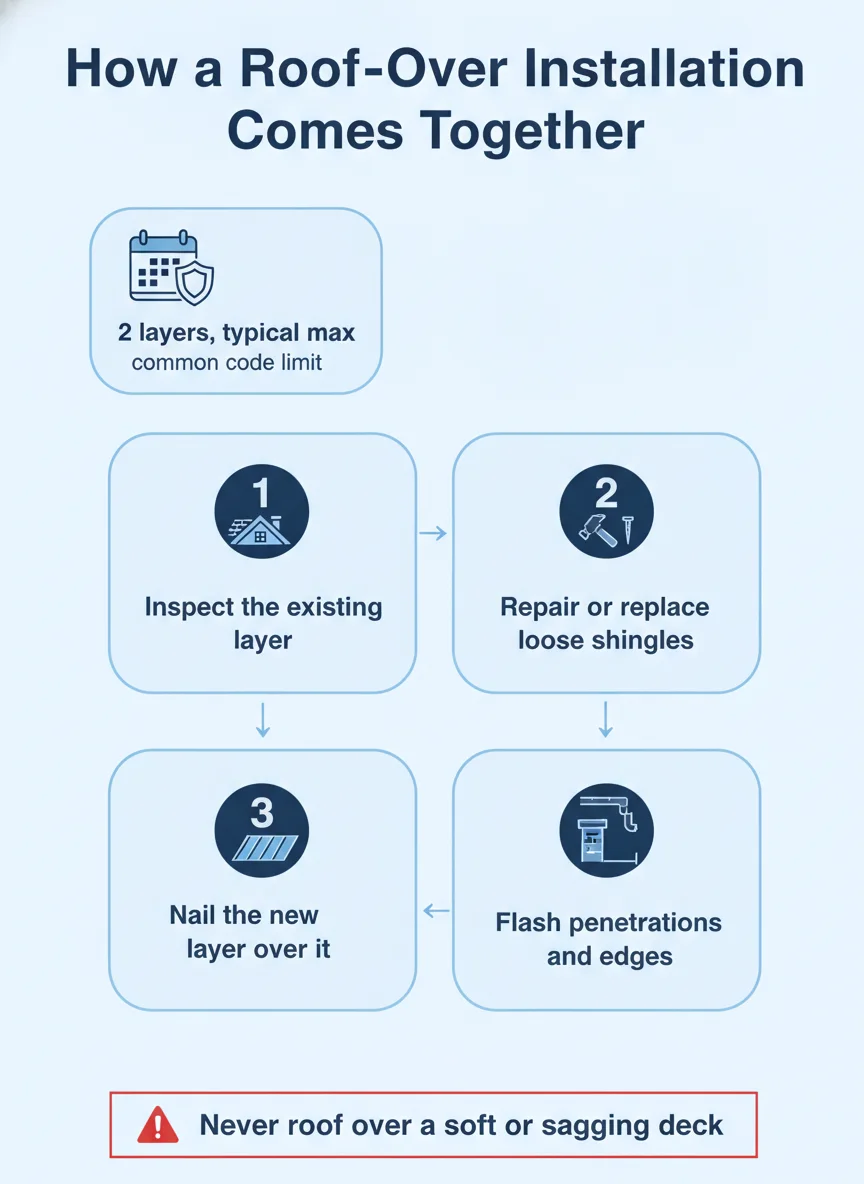
When a roof qualifies for an overlay, the install follows a fairly consistent sequence. Here's the general process a licensed roofer follows from start to finish.
- Confirm layer count: A roofer checks how many layers already exist, since most local codes allow a maximum of two total.
- Inspect the deck: The crew walks the roof checking for soft spots, sagging, or visible damage that would rule out an overlay.
- Replace damaged shingles: Any loose, curled, or missing shingles get repaired or pulled before the new layer goes down.
- Install starter and field shingles: New shingles are nailed over the existing layer following the manufacturer's overlay specifications.
- Re-flash penetrations: Flashing around vents, pipes, and edges is checked and sealed where needed to tie the new layer in.
- Final walk-through: The crew checks nail patterns, seams, and edges before calling the job complete.
What You'll Find When a Roof-Over Goes Wrong
Problems from a roof-over usually don't show up right away. They surface a few years later, once the hidden issues underneath the old layer have had time to spread or the uneven surface has stressed the new shingles beyond what they're built to handle.
Hidden Deck Damage
A soft or rotted deck under two layers of shingles often isn't discovered until a leak forces someone to open the roof up. By that point, the damage has usually spread further than it would have if it had been caught and repaired during a tear-off.
This is one of the main reasons a full roof replacement gives a more reliable long-term result. Pulling the old layer exposes the deck completely, so any rot or weak spots get fixed before the new roofing system goes down, not after.
Flashing and Ventilation Issues
Old flashing left in place under a new layer can continue leaking in the exact same spots it always did, just with the evidence buried under fresh shingles. Attic ventilation can also be affected if ridge or soffit vents aren't properly reworked during the overlay.
These are the kinds of issues a roof inspection is built to catch before they turn into interior damage. An inspector checking an older roof will flag flashing and ventilation concerns whether or not an overlay is on the table.
DIY vs Calling a Licensed Roofer
Roofing over shingles is not a reasonable DIY project for most homeowners, even ones comfortable with other home repairs. Working at height on a sloped surface, achieving correct nail patterns, and tying in flashing correctly all require training and the right safety equipment.
A licensed roofer also carries the liability insurance needed if something goes wrong during the install, and most manufacturers require professional installation to keep a shingle warranty valid in the first place. A homeowner working alone risks both a voided warranty and an unsafe worksite.
Where a homeowner can genuinely help is in the decision-making stage: getting an honest read on layer count, deck condition, and whether an overlay or a full tear-off makes more sense for that specific roof. That read should come from an inspection, not a guess.
Making the Right Call for Your Roof
A roof-over can be a reasonable short-term option on a roof with one existing layer and a sound deck underneath, but it isn't a substitute for addressing real problems. For a roof already showing signs of trouble, a roof-over vs tear-off comparison usually points toward removing the old layer entirely.
The safest way to know which path fits a specific roof is a straightforward inspection that checks layer count, deck condition, and flashing before any decision gets made. Precise Roofing walks homeowners through that process so the choice is based on what's actually on the roof, not a guess.
Frequently asked questions
Can you put a new roof over an old one?
In many cases, yes, as long as there's only one existing layer and the deck underneath is sound. Most local codes cap the total at two layers, and a roofer will check the deck and flashing before recommending it.
Is it cheaper to roof over shingles instead of tearing off?
A roof-over usually costs less upfront because it skips the labor and disposal of removing the old layer. The tradeoff is that hidden deck or flashing problems stay hidden, which can cost more down the line.
How long does a roof-over last compared to a tear-off?
A roof-over typically has a shorter service life than a full tear-off and replacement because the new shingles can't lie as flat and the old layer traps heat and moisture. A tear-off gives the new roofing system a clean, flat surface to perform the way it's designed to.
How do I know if my roof already has two layers?
Look at the edge of the roof from a ladder or have a roofer check during a [roof inspection](/services/roof-inspections). Two layers often show as a thicker edge profile, and a contractor can confirm it quickly without pulling shingles.
Does a roof-over void my shingle warranty?
It depends on the manufacturer and the specific product, so check the warranty paperwork or ask the installer before committing. Many manufacturer warranties have different terms for overlay installations than for installs on a bare deck.