
Why the Length of a Roof Warranty Matters in Colorado
Colorado roofs take a beating from hail, UV, and hard freeze-thaw cycles every year, which makes warranty length more than fine print. A homeowner in the Denver Metro area who replaces a roof today is usually making a decision that's supposed to hold for decades, and the warranty is the paperwork that backs that up if something fails early.
The problem is that most people assume a roof warranty is one number, like '25 years,' when it's actually two or three separate coverages running on different clocks. Knowing which clock applies to which failure is the difference between a covered claim and an argument with a manufacturer's claims department.
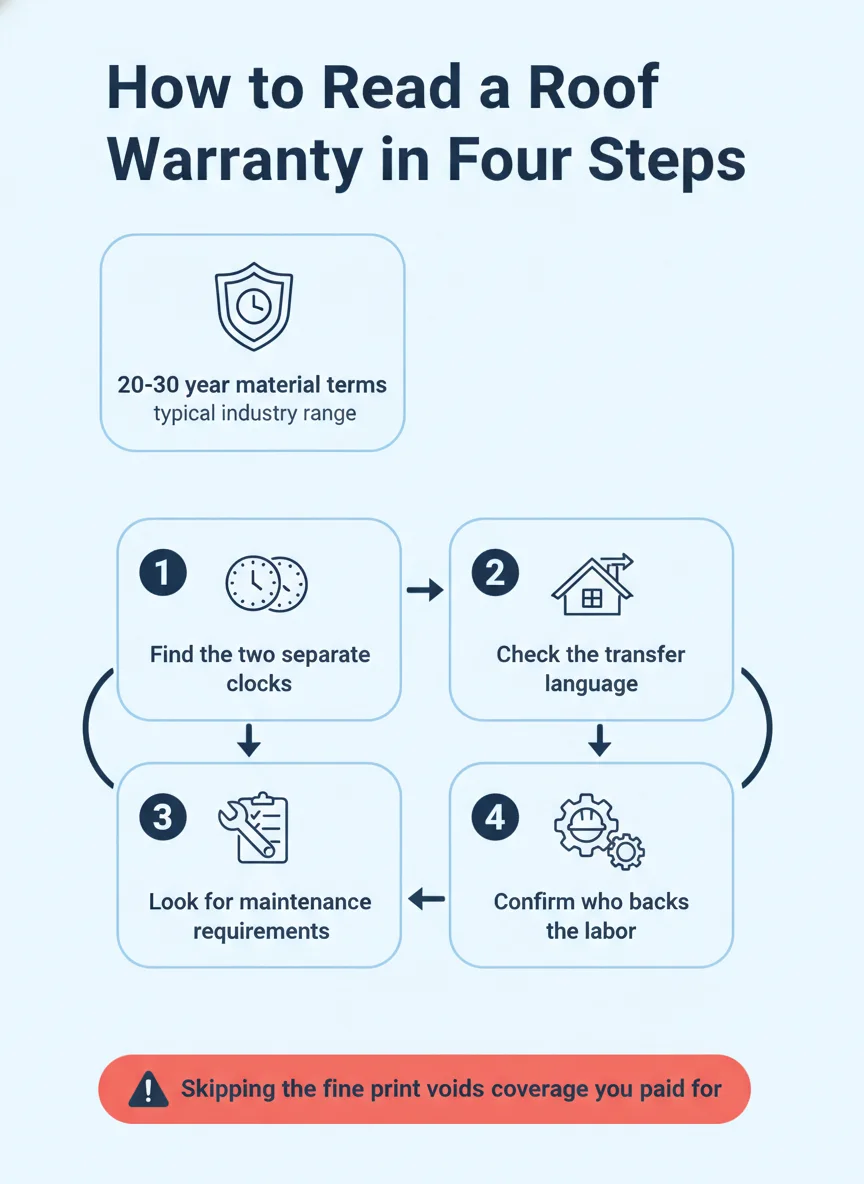
Why Roof Warranties Aren't One Simple Number
A roof warranty bundles coverage from at least two different parties, the material manufacturer and the installing contractor, and each one only promises to stand behind their own part of the job. That's why the term you see advertised, like '30-year shingles,' only tells part of the story.
The Material Warranty
This one comes from the manufacturer and covers defects in the shingle, metal, or membrane itself, things like premature granule loss or material that fails to perform as designed. It's typically the longest number on paper, and it has nothing to do with how well the roof was installed.
Material warranties are often prorated after a set number of years, meaning the payout for a defect shrinks the older the roof gets. A defect found in year three is treated very differently than the same defect found in year twenty, even under the same material warranty.
The Workmanship Warranty
This one comes from the contractor who installed the roof, and it covers installation errors, things like a flashing detail done wrong or fasteners that back out early. It's usually a much shorter term than the material warranty, and it's only as good as the business standing behind it.
A written workmanship warranty matters here more than almost anything else in the paperwork, because a verbal promise from a contractor who's no longer in business is worthless. Precise Roofing backs its installs with a written workmanship warranty rather than a handshake, which is the detail worth asking every contractor to produce.
| Coverage Type | Who Backs It | What It Covers |
|---|---|---|
| Material warranty | Manufacturer | Defects in the shingle, metal, or membrane material itself |
| Workmanship warranty | Installing contractor | Installation errors, flashing, fastening, and detail work |
| Extended/enhanced warranty | Manufacturer, through certified installers | Often combines material and labor into one longer term |
What's Actually Inside a Warranty Document
A real warranty document spells out the start date, the exact term in years for each coverage type, any proration schedule, and the conditions that keep it active. It also lists exclusions, which are the specific situations the manufacturer or contractor won't cover no matter how early a failure shows up.
Most exclusion lists include things like storm damage, improper attic ventilation, or repairs performed by someone other than a certified installer. That last one is why a roof repair done by an unlicensed handyman can quietly void coverage a homeowner paid good money for years earlier.
Step-by-step: Checking Your Warranty Before It's Needed
Most homeowners never open their warranty paperwork until something's already wrong, which is the worst time to learn about an exclusion. Running through these steps once, right after installation, saves a headache years down the road.
- Locate both documents: Find the manufacturer's material warranty and the contractor's workmanship warranty separately. They're rarely the same piece of paper.
- Note the start date: Confirm the warranty clock starts at installation completion, not at the date you signed the contract.
- Check the transfer rules: Look for how many days you have to notify the manufacturer if you sell the home, since this window is often short.
- Read the maintenance clause: Most warranties require some level of upkeep, even if it's just keeping gutters clear so water doesn't back up under the edge.
- List the exclusions: Write down what voids coverage so you know which future repairs need to go through a licensed roofer.
- File it somewhere safe: Keep a digital copy, since paper warranty documents have a way of disappearing in a move or a renovation.
- Set a reminder: Mark the labor warranty's end date on a calendar so you know exactly when that shorter coverage runs out.
What Shortens a Roof Warranty Before Its Term Is Up
Maintenance and Ventilation
Poor attic ventilation is one of the most common reasons a material warranty gets denied, because trapped heat and moisture can cook shingles from underneath faster than normal wear. Clogged or missing gutters can have a similar effect by letting water sit against the roof edge.
This is also why manufacturers sometimes ask for a basic maintenance log, even if it's informal. A few photos from an annual check are usually enough to show the roof was cared for if a claim ever comes up.
Unauthorized Repairs
Having someone other than a certified installer touch the roof, even for a small patch, can void the remaining warranty on that section. Manufacturers want a documented chain of who worked on the roof and when, and an off-the-books repair breaks that chain.
Storm damage repaired through an insurance claim is usually fine as long as it's documented and done by a licensed contractor. Our storm & hail damage process keeps that paper trail intact specifically so it doesn't create a warranty problem later.
What You Can Check Yourself vs What Needs a Pro
A homeowner can absolutely read their own warranty documents, note the key dates, and keep basic maintenance records like photos after a cleaning or an annual walk-around. None of that requires a license, just a little organization.
Where it gets more complicated is diagnosing whether a specific failure is actually covered. Telling the difference between a manufacturing defect and an installation issue, or between normal wear and an exclusion, takes someone who's seen enough roofs to know the difference.
A roof inspection from a licensed contractor is the fastest way to get that answer, because it comes with a written assessment you can hand to the manufacturer or the original installer if a claim needs to be filed. That paperwork carries far more weight than a homeowner's own guess at what went wrong.
Getting the Warranty Term That Actually Protects You
The years printed on a brochure only matter if the coverage behind them is real, which means checking both the material term and the workmanship term before signing anything. A roof with a long material warranty and a weak or unwritten labor warranty still leaves a gap right where installation errors would show up.
If you're weighing a roof replacement anywhere in the Denver Metro area, from Littleton to the rest of the region, ask for both warranty documents in writing before work starts, not after. For more on how the two coverage types stack up side by side, see our warranty comparison guide. Precise Roofing has backed its installs with a written workmanship warranty for more than 20 years in the Denver Metro.
Frequently asked questions
How long does a typical roof warranty last?
Most roofs carry two separate warranties that run different lengths of time, often a long material-defect term from the manufacturer and a shorter labor term from whoever installed it. The exact number depends on the material and the installer, so it's worth asking for both terms in writing before work starts.
Does a roof warranty expire if I sell my house?
Not automatically, but most warranties are only transferable if you notify the manufacturer within a set window after the sale. Missing that window can leave the new owner with no material coverage at all, so it's a detail worth handling at closing.
Can a roof warranty be voided?
Yes, skipped maintenance, unapproved repairs by another contractor, or improper attic ventilation are common reasons manufacturers deny a claim. Keeping a basic maintenance record and using a licensed roofer for any future repair work protects the coverage you already have.
Is a longer warranty always better?
Not necessarily. A long material warranty paired with a short labor warranty still leaves you exposed if the install itself fails, so the labor or workmanship term matters just as much as the number of years printed on the material warranty.
Do roof repairs reset the warranty clock?
Usually not. A repair typically gets covered under its own, separate shorter warranty rather than extending or restarting the original installation warranty, so ask what term applies specifically to repair work.