
What Actually Happens on Replacement Day?
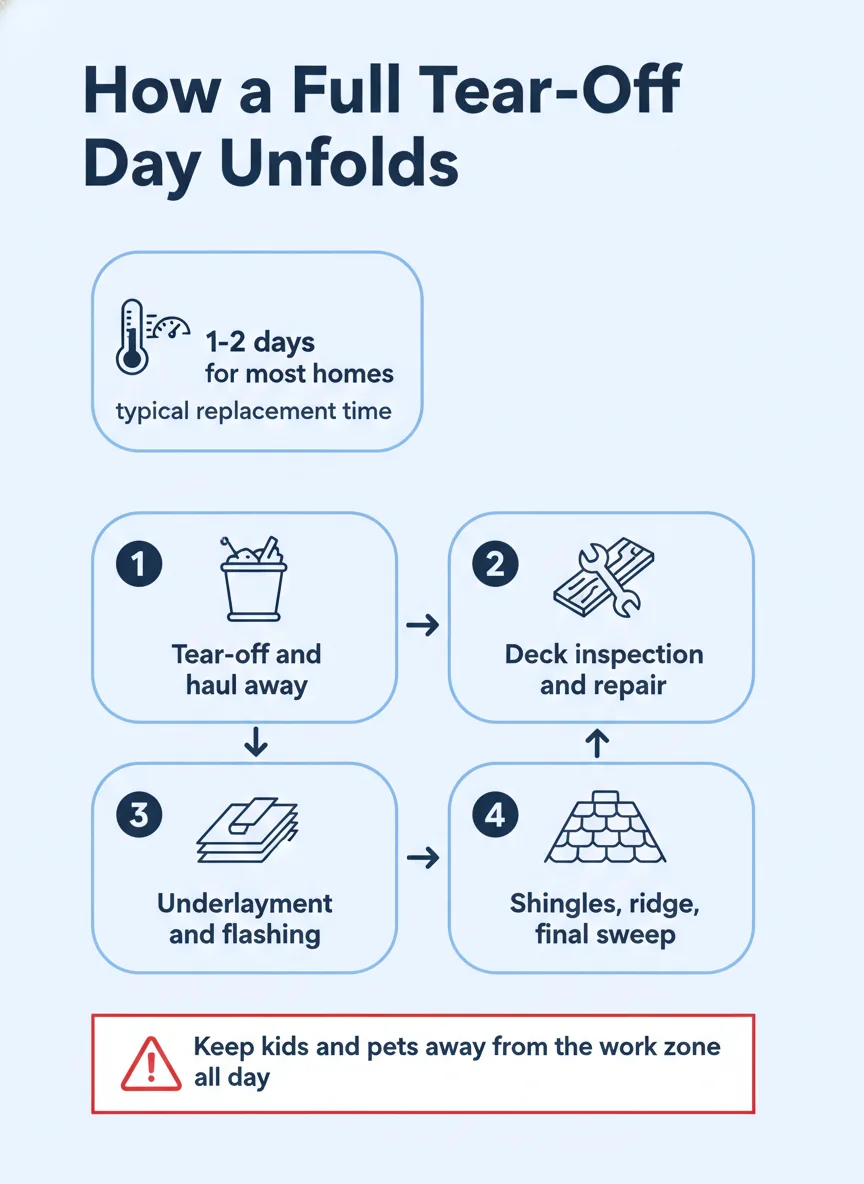
On replacement day, a crew strips the old roofing material down to bare decking, inspects and repairs the wood underneath, then rebuilds the roof in layers: underlayment, flashing, shingles or another finish material, and ridge components, finishing with a full cleanup. For most homes across Denver, Englewood, and the surrounding metro, the whole sequence happens in a single day, sometimes stretching into a second for larger or steeper roofs.
Colorado's mix of intense summer sun, hail, and winter freeze-thaw cycles means roofing material here takes a beating faster than in milder climates, which is why Roof Replacement is one of the most common calls crews in the region get. Knowing the order of operations ahead of time helps homeowners plan their day, protect their property, and know what questions to ask when the crew is done.
Why the Process Follows a Strict Order
Every layer of a roof depends on the one underneath it being sound, so the sequence isn't arbitrary. Skipping a step, or rushing one, is how roofs end up leaking within a few years instead of lasting through their full lifespan.
Crew Arrival and Site Setup
The morning usually starts with a dumpster or trailer positioned close to the house, tarps laid across landscaping and walkways, and ladders set at the access points the crew will use all day. Material bundles, usually shingles, underlayment rolls, and flashing, get staged on the ground or hoisted to the roof depending on the pitch and crew size.
This setup phase is also when the crew walks the property with the homeowner if anyone is home, pointing out anything fragile nearby and confirming where vehicles need to be moved. A few minutes spent here saves a lot of cleanup headaches later.
Tear-Off: Stripping the Old Roof
Crews work in sections, stripping old shingles, underlayment, and flashing down to the bare wood decking, loading debris directly into the dumpster or a chute as they go. This is the loudest, messiest part of the day, and it's also when hidden problems surface, since you can't see the condition of the decking until the old material is off it.
If a section of decking has gone soft from years of trapped moisture, this is the moment it gets caught and replaced, rather than papered over. A crew that skips this check is setting the new roof up to fail early.
| Old Roof Layer | What Happens to It | New Component Installed |
|---|---|---|
| Old shingles or roofing material | Stripped off and loaded into the dumpster | New shingle, metal, tile, or flat system per the scope |
| Old underlayment | Removed along with the shingles | New synthetic or felt underlayment across the full deck |
| Damaged decking | Cut out and discarded | New plywood or OSB sheathing fastened to match code |
| Old flashing around chimneys and vents | Pried off and discarded | New flashing sealed and fastened at every penetration |
What's Happening Under the Shingles You Never See?
Once the deck is bare, the crew checks every sheet of plywood or OSB for soft spots, delamination, or gaps around nails, replacing anything that won't hold a fastener securely. This is the step a homeowner never sees once the roof is finished, but it's the one that determines whether the new roof performs the way it's supposed to.
After the deck passes inspection, synthetic or felt underlayment goes down across the entire surface, with an ice and water barrier typically added along eaves, valleys, and around penetrations where Colorado's freeze-thaw cycles put the most stress on a roof. Drip edge gets installed along the roof's perimeter before the underlayment is finished, so water sheds away from the fascia instead of running behind it.
Step-by-step: A Typical Replacement Day
The exact order can shift slightly depending on the roof's complexity, but most full replacements in the Denver Metro area follow this general sequence from start to finish.
- Site protection: Tarps go down over landscaping and walkways, and the dumpster or trailer is positioned close to the work area.
- Tear-off: Old shingles, underlayment, and flashing are stripped section by section down to bare decking.
- Decking repair: Any soft, rotted, or delaminated sheathing is cut out and replaced before anything new goes down.
- Drip edge and underlayment: Metal drip edge is installed at the perimeter, then underlayment and ice barrier cover the full deck.
- Flashing: New flashing is installed around chimneys, skylights, vents, and valleys to keep water from finding a way in.
- Shingles and ridge: The new roofing material goes on course by course, finishing with ridge caps and ventilation components.
- Cleanup and magnet sweep: Debris is cleared, tarps come up, and a magnetized roller sweeps the yard and driveway for stray nails.
What Should the Final Walkthrough Catch?
A proper final walkthrough should confirm clean, straight shingle lines, flashing that's sealed tight at every penetration, and a yard free of debris and nails before the crew leaves. This is the homeowner's chance to walk the property with the crew lead and ask about anything that looks different from before.
What a Clean Finish Looks Like
From the ground, a finished roof should show even shingle courses, straight ridge lines, and no visible gaps or lifted edges anywhere along the perimeter. Flashing around chimneys and vents should sit flush against the roofing material, not bridged with excess sealant trying to cover a bad fit.
Gutters should be free of shingle granules and nails, and any landscaping that was tarped should look the way it did that morning, minus whatever couldn't be avoided during tear-off. If the crew did a good job, there's very little visible evidence they were there at all, aside from the new roof itself.
Signs Something Was Rushed
Watch for shingle tabs that don't line up, exposed nail heads, flashing that looks caulked rather than properly fitted, or debris left in gutters and flower beds. These are signs a crew moved too fast through a step that deserved more attention.
If decking damage was found during tear-off, ask to see it and get a straight answer on what was replaced and why. A crew that documents this kind of thing, with photos of before and after, is giving you a paper trail worth keeping with your home's records.
Should You Handle Any of This Yourself, or Call a Pro?
Full tear-off and replacement is not a do-it-yourself project for most homeowners. Working at height on a pitched surface, handling old materials safely, and getting underlayment and flashing installed correctly all require training, proper fall protection, and the right tools, and a mistake in any one of those areas can mean a leak that shows up months later.
Where a homeowner can help is in the preparation: moving vehicles, clearing the driveway, taking down anything on walls that could shake loose, and making arrangements for pets or kids to stay elsewhere for the day. Covering items stored in the garage or attic from falling dust is also worth doing ahead of time.
If you're not sure whether your roof needs a full tear-off or just a patch, a Roof Inspections visit before scheduling anything will tell you which one applies, and it's worth reading When a Roof Is Past Repair: The Signs to Watch For if you're still weighing repair against replacement.
Knowing What to Expect Makes the Day Easier
A roof replacement is disruptive for a day or two, loud hammering, a crew on ladders, a dumpster in the driveway, but it follows a predictable sequence that a good crew moves through carefully rather than quickly. Knowing that sequence ahead of time means fewer surprises and better questions to ask when the work is done.
Homeowners across Denver and the surrounding metro deal with the same wear from sun, hail, and freeze-thaw cycles that drives most replacements in this region, and Precise Roofing walks every property through this process from the first inspection to the final sweep.
Frequently asked questions
How long does it take to replace a roof?
Most single-family homes in the Denver Metro area are torn off and fully replaced in one to two days, weather and roof size permitting. Steep pitches, multiple layers of old shingles, or a large square footage can push a job into a third day.
Do I need to be home during roof replacement?
No, but someone should be reachable by phone in case the crew finds hidden decking damage that needs a decision before work continues. Many homeowners go to work and come home to a finished roof.
What should I do to prepare my house before replacement day?
Move vehicles out of the driveway, take down wall art or mirrors that could shake loose from hammering, and clear a path around the house for the dumpster and material delivery. Cover anything stored in the attic if the crew will be accessing it from inside.
Will my yard and landscaping get damaged?
A careful crew lays tarps along the foundation to catch falling debris and uses a magnetized sweep afterward to pick up stray nails. Some disturbance to flower beds or soft ground near the house is normal, but a good crew protects what it can and cleans up before leaving.
What happens if the crew finds rotten wood under the shingles?
Damaged decking gets replaced on the spot before underlayment goes down, since installing new shingles over soft or rotted plywood just hides the problem. A reputable crew will show you the damage and explain the repair before moving forward.