
Why material choice matters more in Colorado than most places
Front Range and mountain-adjacent homes deal with a mix most of the country doesn't: intense UV at altitude, hail that can fall any month from spring through fall, wide daily temperature swings, and heavy wet snow sitting on a roof for days at a time. Every one of those stresses works on roofing material differently, so the answer to which one lasts longest isn't universal. It depends on what the roof is up against in a given neighborhood.
If you're planning a roof replacement in Denver Metro, Colorado Springs, or anywhere along the Front Range, the material decision is really a decision about which failure mode you're willing to manage. Asphalt wears down slowly and predictably. Metal shrugs off hail but costs more upfront. Tile outlasts almost everything but is heavy and brittle under impact. Flat membrane systems serve a completely different roof shape and have their own clock.
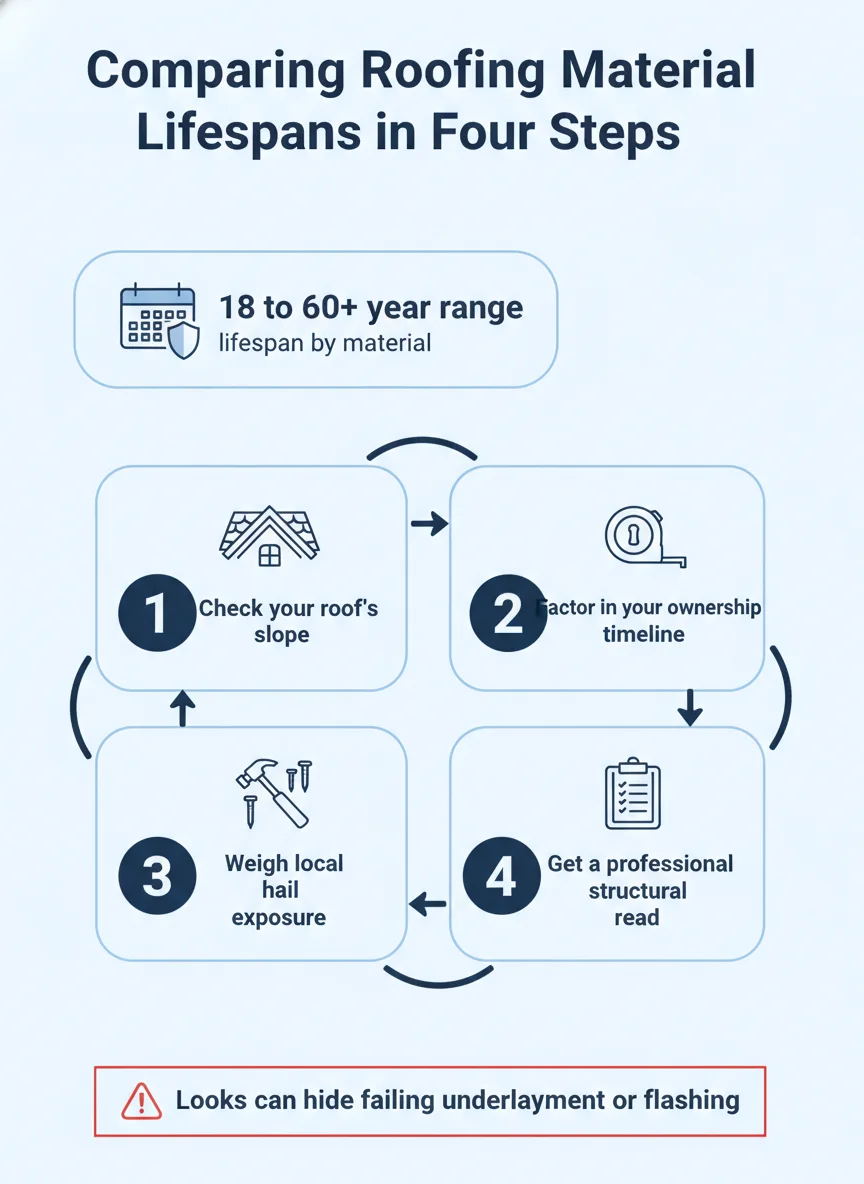
What actually shortens or extends a roof's life here
Three forces do almost all the damage in this climate: ultraviolet exposure baking the surface, thermal cycling that expands and contracts materials daily, and impact from hail or wind-driven debris. A material's real-world lifespan is a function of how well it resists all three at once, not just one of them.
UV and altitude
Higher elevation means thinner atmosphere and more direct UV exposure than at sea level. Asphalt shingles lose oils and granules faster under that exposure, which is part of why the same shingle line often performs differently here than it does in a lower, hazier climate. Metal and tile are largely immune to UV degradation, which is one reason their lifespans run so much longer.
Thermal cycling and hail
Daily swings of 30 to 40 degrees are common along the Front Range, and that constant expansion and contraction fatigues roofing materials over years. Hail adds a sudden, sharper stress on top of that slow fatigue. A shingle that's already brittle from UV and thermal cycling bruises or cracks more easily than a newer one, which is why storm & hail damage tends to show up hardest on older roofs.
| Material | Typical Lifespan Range | Main Weakness in Colorado |
|---|---|---|
| Asphalt shingles | 18 to 22 years | UV and hail bruising |
| Standing seam or screw-down metal | 40 to 60 years | Higher upfront cost, denting from large hail |
| Concrete or clay tile | 50 years or more | Weight and cracking from direct impact |
| Flat membrane (TPO, EPDM, modified bitumen) | 15 to 25 years | Seam failure and ponding water |
How each material actually ages on the roof
Asphalt shingles age in stages you can usually see from the ground: color fading and granule loss first, then curling or cupping at the edges, then cracking as the mat underneath loses flexibility. Metal roofs age almost invisibly for decades, with the main concerns being fastener loosening over time and finish fading rather than structural failure. Tile roofs can look nearly the same at year 40 as they did new, since the material itself doesn't degrade, though the underlayment beneath it does have its own replacement clock separate from the tile.
Flat and low-slope systems age differently because they're built in layers rather than overlapping pieces. The membrane itself resists UV reasonably well, but seams, flashing details, and drainage are where these roofs typically fail first, especially on commercial buildings. That's a big part of why commercial roofing maintenance programs focus heavily on seam inspection and keeping drains clear.
Step-by-step: how to judge which material fits your roof
Choosing a material isn't just about which one lasts longest on paper. It's about matching the material to your roof's slope, your budget, and how long you plan to own the home.
- Check your roof's slope: Steep-slope roofs can use shingles, metal, or tile. Low-slope and flat roofs need a membrane system instead, since shingles and tile aren't built to shed water on a near-flat surface.
- Factor in your timeline: If you plan to stay in the home 10 to 15 years, a mid-range asphalt shingle may make the most financial sense. For a forever home, metal or tile spreads the cost over a much longer lifespan.
- Weigh hail exposure: Homes in areas with frequent hail activity benefit from impact-resistant shingle options or metal, which handle hail impact far better than standard three-tab asphalt.
- Consider roof weight limits: Tile is heavy, and older homes may need a structural check before a tile installation is approved. Metal and asphalt put far less load on the framing.
- Get a professional read: A roof inspection will tell you what your current structure can support and whether your attic ventilation is adequate for the material you're considering.
- Compare total cost of ownership: Factor in not just installation but expected maintenance, repair frequency, and insurance considerations over the material's full lifespan, not just the sticker price today.
What early failure looks like for each material
Knowing the signs of a material reaching the end of its life early, before the "typical" lifespan window, helps you catch problems before they become leaks.
Asphalt shingles
Watch for granules collecting in gutters, shingles that look dark or shiny where the protective coating has worn thin, and edges that curl upward instead of lying flat. These are signs the shingle is drying out faster than expected, often from a combination of sun exposure and inadequate attic ventilation pushing heat up through the roof deck from underneath.
Metal, tile, and flat systems
On metal roofs, watch fastener heads for backing out or rust streaking, which signals the seal is failing even though the panel itself looks fine. On tile, listen and look for cracked or slipped pieces after a hail event. On flat roofs, standing water that doesn't drain within 48 hours after rain or snowmelt is the clearest early sign of a slope or drainage problem that will shorten the membrane's life.
What a homeowner can check versus what needs a licensed roofer
From the ground or a ladder at the gutter line, a homeowner can reasonably check for granule buildup in gutters, visibly cracked or missing shingles, obvious dents on metal panels, and water stains on interior ceilings that suggest a leak has already started. Binoculars from the yard after a hail event can also give you a rough read on whether impact marks are visible.
Walking the roof surface itself, checking flashing at chimneys and vents, evaluating attic ventilation, and assessing structural load for a material change are all jobs that call for a licensed roofer. Tile and steep-slope metal roofs in particular carry real fall risk and can crack or dent under foot traffic from someone who doesn't know where it's safe to step.
If you're weighing a repair against starting over with a different material, a side-by-side look at repair or replace factors can help frame the decision before a contractor ever sets foot on the roof.
Picking the right material for your home
There's no single material that wins in every category. Asphalt shingles remain the most common choice because they balance cost, appearance, and a reasonable lifespan for most homeowners. Metal and tile cost more upfront but can outlast two or three asphalt replacements over the life of a home, which changes the math if you're planning to stay put.
The right call depends on your roof's slope, your budget, your hail exposure, and how long you plan to own the house. Precise Roofing has handled replacements in shingle, metal, tile, and flat systems across Denver Metro for over 20 years and can walk you through which material makes sense for your specific roof.
Frequently asked questions
What roofing material lasts the longest overall?
Concrete and clay tile generally last the longest, often 50 years or more, because the material itself doesn't degrade from UV or weather the way asphalt does. Metal roofing comes in a close second, typically lasting 40 to 60 years depending on the panel type and installation.
Is metal roofing worth it compared to asphalt shingles?
It depends on how long you plan to stay in the home and your tolerance for upfront cost versus long-term value. Metal costs more to install but can outlast two or more asphalt roofs, and it handles hail and wind better than standard shingles.
Does altitude affect how long a roof lasts?
Yes, higher elevation means more direct UV exposure, which speeds up granule loss and brittleness in asphalt shingles faster than at lower elevations. Metal and tile are largely unaffected by UV, so altitude matters less for those materials.
Can tile roofs handle Colorado hail?
Tile resists UV and weathering extremely well, but individual tiles can crack under a direct, hard hail impact. A damaged tile can usually be replaced individually without redoing the whole roof, which keeps repairs manageable.
How do I know which roofing material is right for my house?
The right material depends on your roof's slope, your home's structural capacity, your budget, and how long you plan to stay in the house. A professional roof inspection is the most reliable way to get a straight answer for your specific roof.