
Two roofs, two very different lifespans
Anyone replacing a roof in the Denver Metro eventually runs into the same fork in the road: metal or asphalt shingles. Both materials show up on homes across Englewood, Denver, and the surrounding towns, and both can perform well here if they're installed correctly. The decision usually comes down to how long you want the roof to last, what you're willing to spend up front, and how your specific roof is shaped.
Colorado's climate puts real demands on a roof. Summers bring intense UV exposure and sudden hailstorms, winters bring heavy snow loads and repeated freeze-thaw cycles, and the swings between hot days and cold nights stress every seam and fastener on the roof. Metal and shingles handle those stresses in different ways, which is exactly why the comparison matters more here than it might in a milder climate.
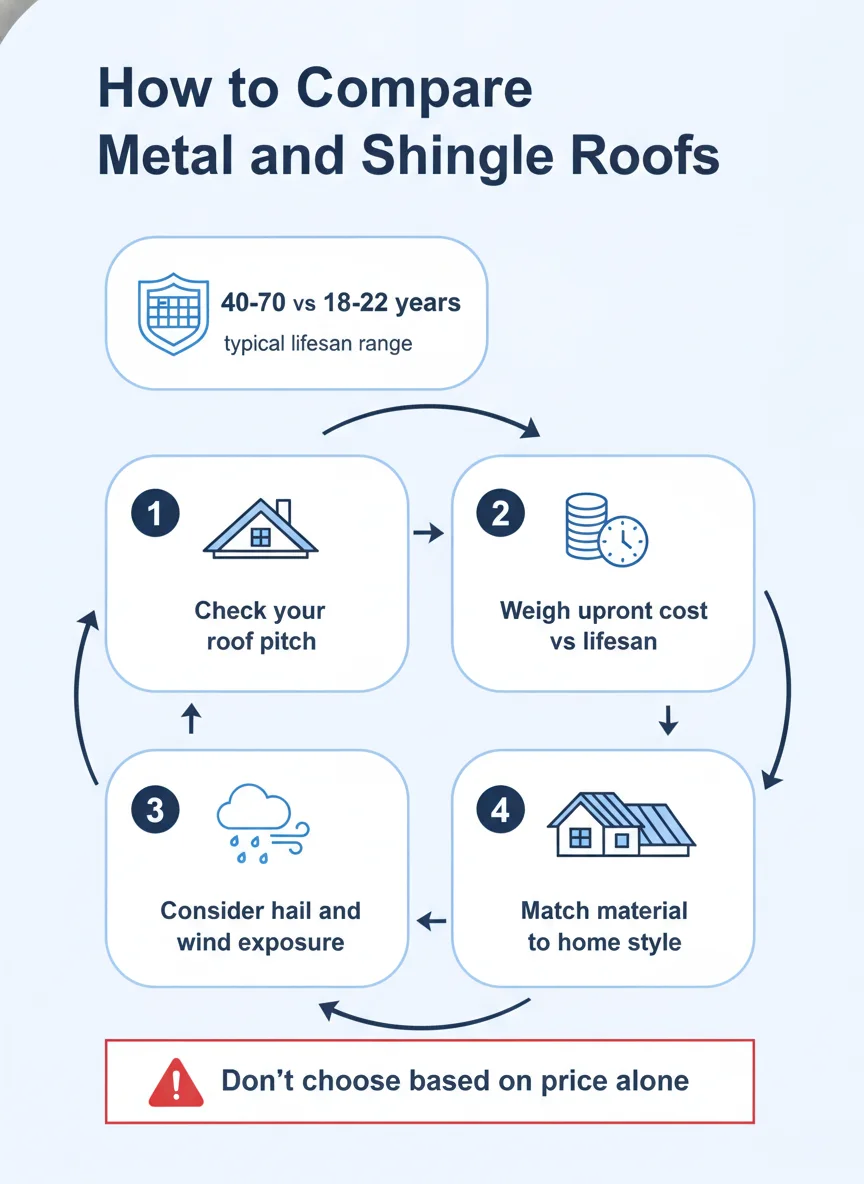
Why metal and shingles age so differently
The core difference comes down to how each material responds to heat, moisture, and impact over time. Shingles are made of a fiberglass mat coated in asphalt and mineral granules, and that coating slowly breaks down under UV exposure. Metal panels are a solid, continuous surface with far fewer failure points, which is a big part of why they tend to outlast shingles by decades.
How asphalt shingles hold up over time
Asphalt shingles lose granules gradually as the sun bakes the surface, and that granule loss is what eventually leads to curling, cracking, and bald spots. In Colorado's intense UV environment, that aging process runs on roughly the same timeline as the rest of the country, with most shingle roofs lasting somewhere in the 18 to 22 year range across the industry.
Hail is the other factor. A hard hit can bruise or crack a shingle without any visible hole, and that weak spot is where a leak starts months or years later. That's part of why a roof inspection after a hailstorm is worth scheduling even if nothing looks obviously wrong from the ground.
How metal roofing holds up over time
Metal panels don't lose granules and they don't crack the way shingles do, which is why they routinely last 40 to 70 years depending on the specific product and finish. The coating on a metal roof fades over time, but the structural panel underneath keeps doing its job for decades after a shingle roof of the same age would already be due for replacement.
Metal also sheds snow more aggressively than shingles do, which reduces how long snow load sits on the roof deck. That matters on steeper Front Range roofs where heavy, wet spring snow is common, since less time under load generally means less stress on the structure beneath.
| Factor | Asphalt Shingles | Metal Roofing |
|---|---|---|
| Typical lifespan | 18-22 years industry-wide | 40-70 years depending on product |
| Upfront cost | Lower material and labor cost | Higher material and labor cost |
| Hail performance | Can bruise or crack on hard hits | Can dent cosmetically, rarely fails |
| Repair approach | Individual shingles replaced section by section | Panel sections replaced, matching finish can be harder to source |
What actually makes up each roofing system
A shingle roof is built in layers: decking, an underlayment for water protection, starter strips along the edges, the shingles themselves, and flashing anywhere the roof meets a wall, chimney, or vent. Every one of those layers has to be installed correctly for the whole system to perform, which is why workmanship matters as much as the shingle brand itself.
A metal roof uses the same decking and underlayment foundation, but the top layer is either standing seam panels with raised, interlocking ribs or exposed-fastener panels screwed directly through the surface. Standing seam costs more but has no exposed fasteners to work loose over time, while exposed-fastener panels are more affordable but need their screws checked periodically as the roof ages.
Step-by-step: how to decide which material fits your roof
Working through the decision in order keeps you from picking a material based on one factor, like price, while ignoring something like pitch or how long you plan to stay in the home.
- Check your roof's pitch: Steep roofs shed snow and water fast with either material, while low-slope roofs may push you toward a metal or membrane system that handles standing water better.
- Set your time horizon: If you plan to stay in the home for decades, metal's longer lifespan can offset its higher upfront cost over the life of the roof.
- Weigh your hail exposure: Homes in hail-prone areas benefit from metal's resistance to cracking, though both materials can show cosmetic impact marks.
- Think about your home's style: Metal reads as a modern or mountain-style look, while shingles blend into a wider range of architectural styles, especially in established neighborhoods.
- Get an honest inspection first: Before comparing materials, find out the real condition of your current roof and decking so you're planning for a roof replacement based on facts, not guesswork.
- Ask about insurance and warranty terms: Confirm with your insurance provider and your roofer what coverage and workmanship terms apply to each material before you commit.
What you'll notice once a roof starts to fail
The warning signs look different depending on which material you have, which is one more reason a side-by-side comparison only goes so far. Knowing what to watch for on each roof type helps you catch problems before they turn into a leak inside the house.
Signs an asphalt shingle roof needs attention
Curling edges, bald patches where granules have worn away, and shingles that look cracked or are missing outright are the clearest signs of an aging shingle roof. Granules collecting in the gutters after a rain or wind event is another early signal worth noting.
Soft spots underfoot or visible sagging along the roofline usually point to decking damage beneath the shingles, which is more serious than surface wear alone. That combination is a good reason to schedule a roof inspection rather than wait for a visible leak.
Signs a metal roof needs attention
Metal roofs show trouble differently, usually through loose or backed-out fasteners on exposed-fastener panels, rust developing at cut edges or scratches in the finish, or a seam that's begun to separate. These issues tend to be isolated rather than spread across the whole roof.
Because metal panels interlock or run in long continuous sheets, a problem in one section can sometimes affect water flow in nearby areas. Catching a loose fastener or lifted seam early keeps a small fix from turning into a larger repair.
What a homeowner can handle and what needs a licensed roofer
Homeowners can reasonably handle visual checks from the ground, clearing debris out of valleys and gutters, and keeping an eye on attic ventilation and insulation, since poor airflow shortens the life of either roofing material. These tasks don't require climbing onto a steep roof and go a long way toward catching problems early.
Anything involving walking the roof surface, replacing shingles or panels, or working around flashing and penetrations should go to a licensed roofer. Both materials require specific tools and techniques, and a mistake on a metal panel seam or a shingle course can undo the water-shedding design the whole system depends on.
A full material comparison, like asphalt shingles vs metal roofing for a Colorado home, is worth reading before you commit, but the final call should come after a professional has actually looked at your roof's pitch, decking condition, and ventilation setup.
Getting the right answer for your specific roof
There's no universal winner between metal and shingles. A homeowner planning to stay put for thirty years and willing to pay more up front often leans metal, while someone replacing a roof on a tighter budget or planning to sell within a decade often sticks with shingles. Both are legitimate choices when they're installed by a crew that knows the material and the local climate.
If you're weighing the two options for a home in Englewood, Denver, or anywhere across the metro, Precise Roofing can walk the roof with you, explain what your pitch and exposure call for, and lay out both options in plain terms before you decide.
Frequently asked questions
Is a metal roof better than shingles in Colorado?
Metal roofs generally last longer and shed snow and hail better, but asphalt shingles cost less upfront and are easier to repair in sections. The better choice depends on your budget, how long you plan to stay in the home, and your roof's pitch and exposure.
Do metal roofs dent from hail?
Metal can show cosmetic dimpling from large hail, but it's far less likely to lose its ability to keep water out the way a cracked or bruised shingle can. Thicker gauge panels and standing seam profiles resist denting better than thin panel products.
Is metal roofing noisier than shingles in the rain?
With proper solid decking and underlayment beneath the panels, a metal roof is not noticeably louder than a shingle roof in most homes. The noise difference people remember usually comes from older barn-style installs without a solid substrate.
Can you install metal roofing over existing shingles?
Some metal systems can go over a single layer of shingles, but a full tear-off gives better long-term results because it lets the installer check the decking underneath for rot or damage. A licensed roofer can tell you which approach fits your situation after a look at the roof.
Does a metal roof lower home insurance costs?
Some insurance carriers offer a discount for impact-resistant roofing materials, which can include certain metal and Class 4 shingle products, but the amount and eligibility vary by policy. Check with your insurance provider to see what your specific policy allows.